

128 Channel USB GPIO Module With Analog Inputs


₹25,890.00
In StockFor Numato Products Price details/ quotation please mail your requirements on dolphinlabs17@gmail.com
Description
For Numato Products Price details please mail your requirements on dolphinlabs17@gmail.com
Numato Lab’s 128 Channel USB GPIO Module helps to connect real-world devices to your computer easily through USB. No USB specific knowledge is required to set up and use this module. Numato Lab’s GPIO devices provide an interface that looks like a Serial Port on your Operating System and thus effectively hiding the complexity of USB. All that you need to operate GPIOs is a standard Serial Terminal Emulator such as HyperTerminal/Teraterm or your favorite programming language such a C/C++, Python, Perl, etc… Besides providing standard General Purpose IOs, this product has multiple Analog Inputs as well. These Analog inputs can be used to read Analog quantities such as temperature, pressure, etc.. with the help of appropriate sensors.
Features
- 128 TTL(3.3V) compatible GPIOs available
- 32 Analog input channels (Multiplexed with GPIOs)
- 12 Bit Analog input resolution
- All GPIOs can be individually configured as input or output.
- Maximum 20 mA Source/Sink capacity.
- Can be controlled by using standard serial console applications or custom applications.
- Onboard controller can be reprogrammed for custom applications
Applications
- Building automated test fixtures
- Add more IOs and Analog channels to industrial/modular computers
- Add more IOs and Analog channels to Raspberry Pi, Intel Edison, BeagleBone and similar CPU boards
- Add IOs to Android-based systems (Smartphones, Tabs and custom devices)
Supporting operating systems
- Windows XP
- Windows 7
- Windows 8/8.1
- Windows 10
- Linux
- Mac OS X
- Android
-
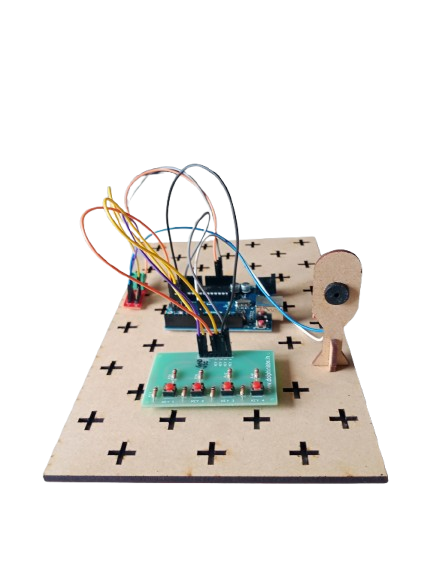
A Morse Code Generator is an electronic project designed to convert text input into Morse code signals using Arduino, a keypad, and a buzzer. Morse code is a method of encoding text characters as sequences of dots and dashes, widely used in communication systems, especially in emergency signaling and amateur radio. This project demonstrates signal encoding, microcontroller programming, and interactive electronics.
-
 ₹4,742.00
 -
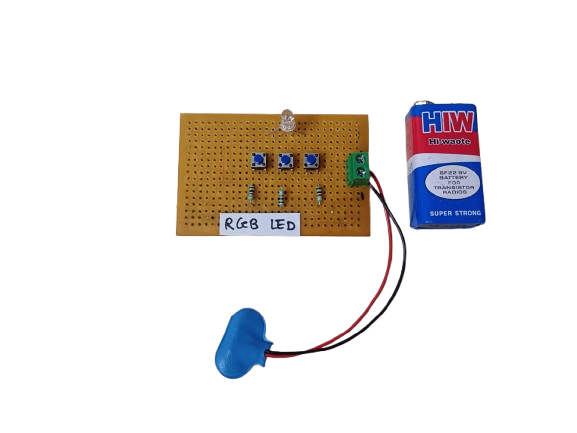
An RGB LED is a light-emitting diode that combines Red, Green, and Blue LEDs in a single package. By adjusting the brightness of each color, it can produce millions of colors, making it ideal for decorative lighting, displays, and indicators.
₹140.00 -
 ₹3,305.00
 -
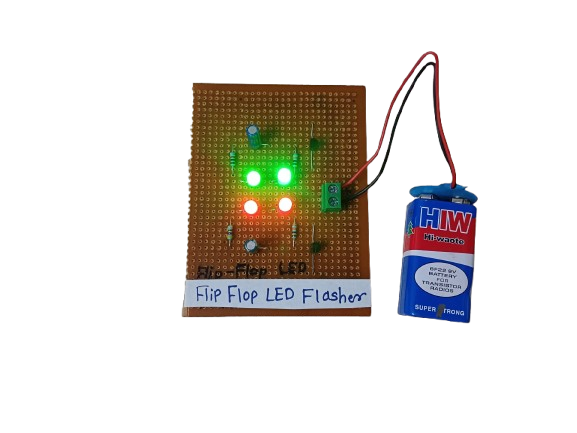
A Flip-Flop LED Flasher is a simple electronic circuit that alternately turns two LEDs on and off in a continuous loop, creating a blinking or “flashing” effect. It’s commonly built using transistors, resistors, capacitors, and LEDs, forming an astable multivibrator — a basic circuit that oscillates between two states without any external triggering.
It’s often used for decoration, indicators, or learning basic electronics.
₹175.00 -

A digital thermometer project using the 8051 microcontroller involves interfacing a temperature sensor, like the LM35, with the microcontroller to measure temperature. The 8051 processes the sensor data and displays the temperature on LCD.
Related products
-

For Numato Products Price details/ quotation please mail your requirements on dolphinlabs17@gmail.com
₹4,245.00 -

For Numato Products Price details/ quotation please mail your requirements on dolphinlabs17@gmail.com
₹5,480.00 -
 ₹25,245.00
 -
 ₹10,401.00
 -
 ₹5,216.00
 -
 ₹7,321.00

