
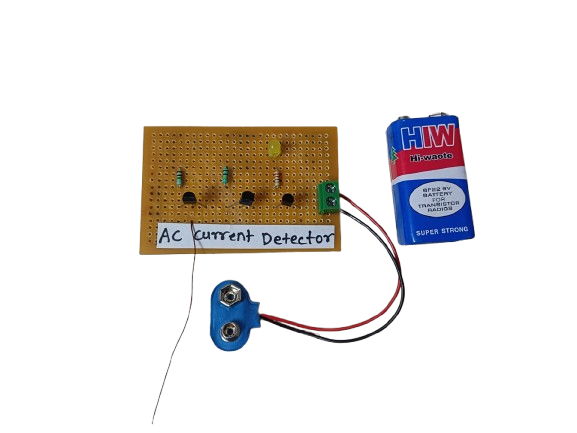
AC Current Detector


₹180.00
In StockAn AC Current Detector is a device or circuit that senses the flow of alternating current (AC) through a wire or appliance. It typically uses components like a current transformer (CT) or hall effect sensor to detect AC current and activate an indicator such as an LED or buzzer.
Description
An AC current detector is designed to detect the presence or flow of AC current in a conductor without making direct electrical contact. It is widely used in electrical safety, troubleshooting, automation systems, and energy monitoring.
There are several methods to detect AC current, including:
- Current Transformer (CT)
- Hall Effect Sensor
- Shunt Resistor + Rectifier
- Inductive Pickup Coil
These detectors can be used for:
- Turning on an alert when current flows
- Detecting power usage in appliances
- Triggering relays for protection or automation
Applications of AC Current Detector:
1.AC Line Status Monitoring
1.Detects whether current is flowing in a power line.
2.Appliance Monitoring
1.Detects if a machine is ON or OFF based on current.
3.Overcurrent Protection
1.Triggers protection circuits when current exceeds a limit.
4.Home Automation
1.Smart switch activates based on appliance usage.
5.Industrial Equipment
1.Monitors operation of motors and heavy machinery.
6.Power Saving Systems
1.Turns off unused devices automatically if no current is detected.
-
 ₹18,721.00
 -
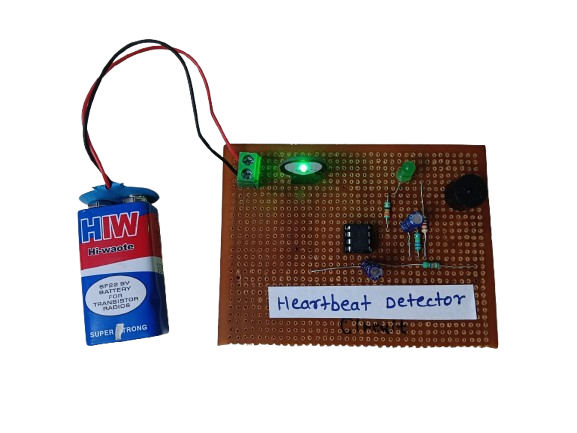
A heartbeat detector is an essential device for monitoring heart health, providing real-time data about a person’s pulse rate. Whether in a hospital, gym, or a DIY electronics project, it demonstrates how biomedical signals can be measured and processed using sensors and electronics. It’s a valuable tool for both personal health awareness and professional medical diagnostics.
₹450.00 -
-
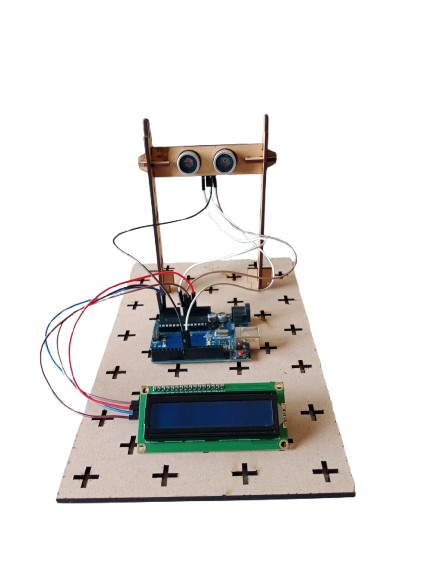
A digital ruler is an electronic measuring device that provides precise measurements of length, width, or depth. Unlike traditional rulers or tape measures, digital rulers use sensors and electronic displays (often LCD or LED) to show measurements accurately, usually in both metric (mm/cm) and imperial (inches) units. They are widely used in engineering, design, woodworking, tailoring, and education where precision is critical.
-

A Temperature and Humidity Monitoring System using Arduino and a DHT11 sensor that measures and displays real-time temperature and humidity data on the serial monitor.
-
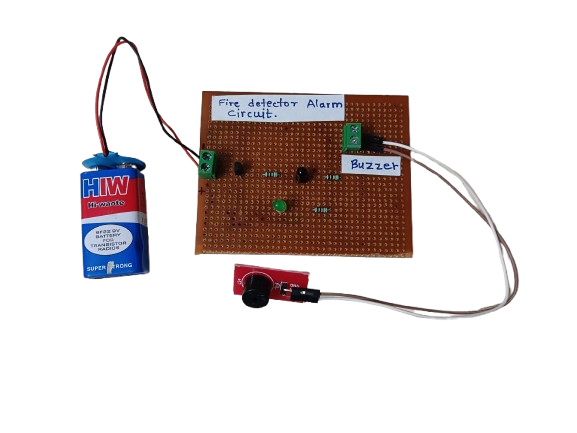
A Fire Detector Alarm is an electronic system designed to detect the presence of fire or high heat and trigger an audible or visual alarm. It typically uses sensors like thermistors, temperature sensors, or flame sensors to detect abnormal conditions indicating fire.
₹190.00
Related products
-
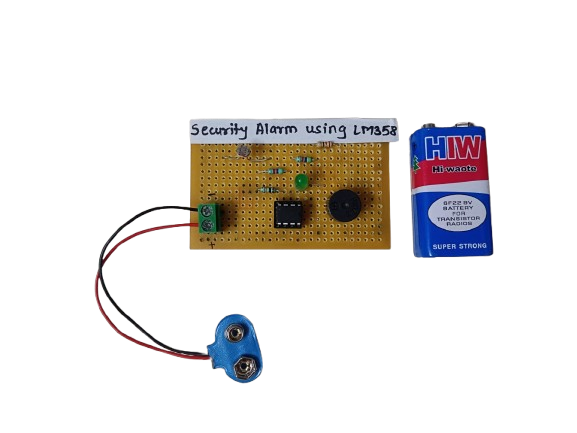
A Security Alarm Circuit using the LM358 IC is a simple yet effective system designed to trigger an alarm when unauthorized access or movement is detected. The LM358, a dual operational amplifier (Op-Amp), is used as a comparator to detect voltage changes from sensors like LDRs, IR sensors, or switches, and then activate a buzzer or relay.
₹200.00 -
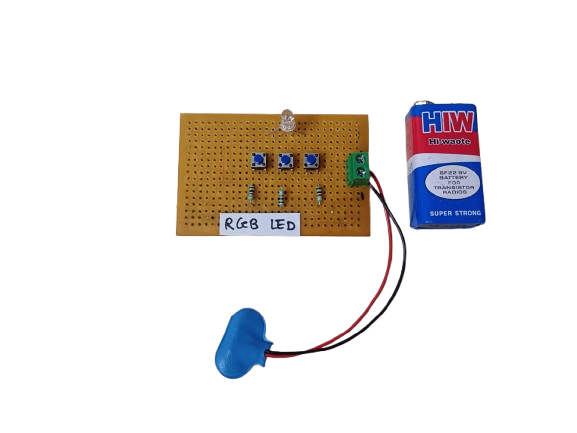
An RGB LED is a light-emitting diode that combines Red, Green, and Blue LEDs in a single package. By adjusting the brightness of each color, it can produce millions of colors, making it ideal for decorative lighting, displays, and indicators.
₹140.00 -
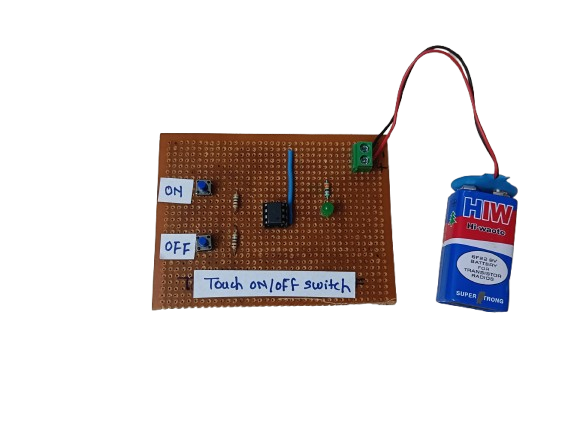
A Touch ON/OFF Switch is an electronic circuit that allows a device to be turned on or off by simply touching a sensor pad or wire, instead of using a mechanical switch. It works by detecting a small electrical signal from the human body (capacitive or resistive touch) and using that to toggle the output state.
These switches are commonly used in modern electronics, home automation, and DIY projects due to their durability, aesthetic appeal, and user-friendly operation.
₹150.00 -
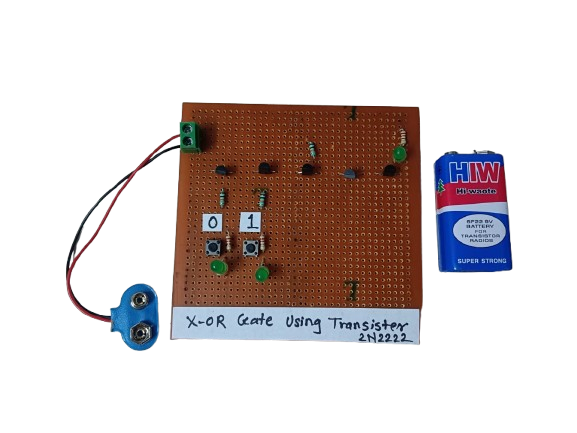
An XOR (Exclusive OR) gate is a digital logic gate that outputs true (1) only when the number of true inputs is odd. For two inputs, the output is high when the inputs are different. XOR gates can be constructed using basic logic gates or directly with transistors (BJT or MOSFET). Using transistors, we can design compact, efficient circuits for custom digital logic applications.
₹160.00 -
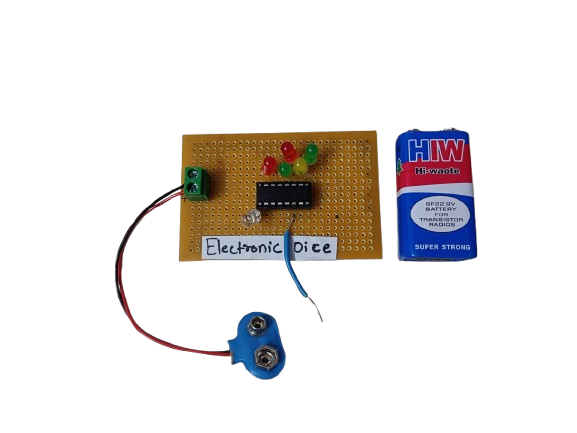
An Electronic Dice is a digital version of a traditional dice, which generates a random number (1 to 6) and displays it using LEDs or a 7-segment display. It uses components like a 555 timer, counter IC (like CD4017), or microcontrollers such as Arduino to simulate dice rolls electronically.
₹190.00 -
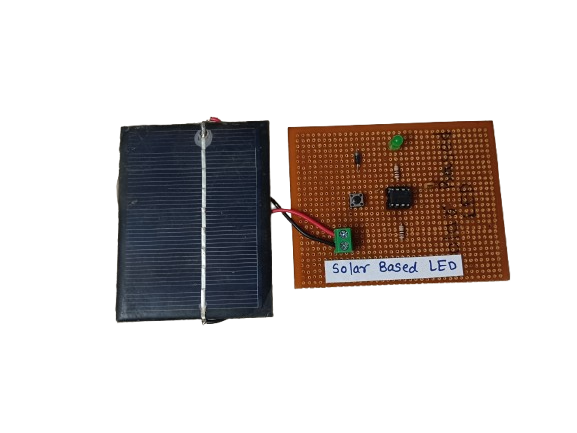
A solar-based LED system is a lighting setup that uses solar energy to power LED (Light Emitting Diode) lights. During the day, a solar panel captures sunlight and converts it into electrical energy, which is stored in a battery. At night or in low-light conditions, this stored energy powers the LED light.
These systems are eco-friendly, cost-effective, and ideal for off-grid or outdoor applications like street lighting, garden lights, and emergency lighting.
₹250.00

