

Description
For Numato Products Price details/ quotation please mail your requirements on dolphinlabs17@gmail.com
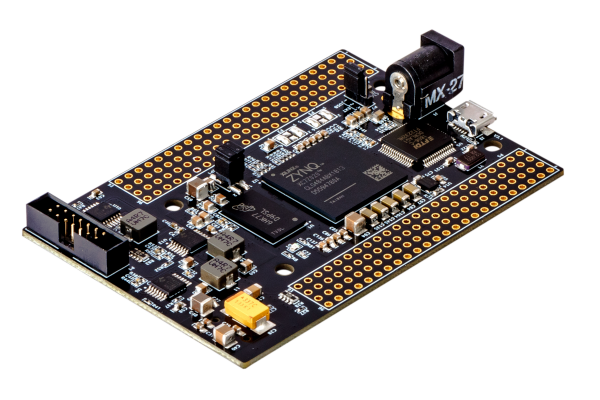
Callisto K7 is an easy-to-use FPGA Module featuring the AMD Kintex 7 FPGA with 4Gb DDR3 SDRAM. This board contains the AMD XC7K410T– FBG676 FPGA. The high-speed USB 3.1 interface (USB-C connector) provides a fast and easy configuration download to the onboard SPI flash. There is no need for a programmer or special downloader cable to download Bitstream to the board. The FPGA Module also provides easy access to JTAG signals on a standard Xilinx Platform Cable compatible header. Callisto K7 provides the user with the flexibility of adding their own peripherals through IO Expansion Headers.
Features
- FPGA: AMD XC7K410T in FBG676 package
- DDR3: 4Gb DDR3 (MT41J256M16HA-125:K or equivalent)
- Flash memory: 512 Mb Quadbit SPI flash memory (S25FL512SDSBHV210/IS25LP512M-RHLE)
- 1 x 100MHz CMOS oscillator
- USB 3.1 Gen1 @5Gbps (USB Type-C connector)
- Onboard voltage regulators for single power rail operation
- 12V DC power supply
- A Push Button for the reset pin
- JTAG header for programming and debugging
- 274 IOs for user-defined purposes
- All user IOs are length matched and can be used as differential pairs
Applications
- Product Prototype Development
- Communication Device Development
- Accelerated Computing Integration
- Development and Testing of Custom embedded processors
- Signal Processing
- Educational tool for Schools and Universities
-
 ₹2,783.00
 -
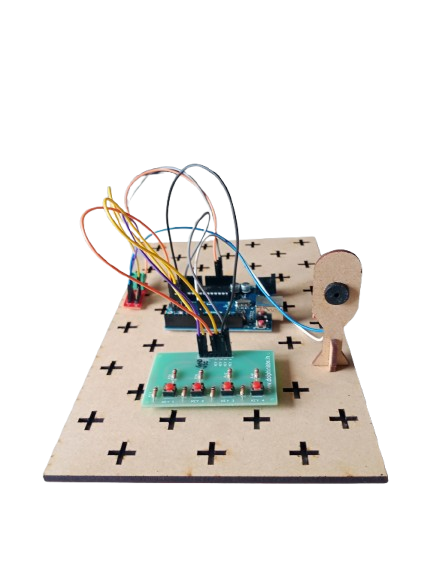
A Morse Code Generator is an electronic project designed to convert text input into Morse code signals using Arduino, a keypad, and a buzzer. Morse code is a method of encoding text characters as sequences of dots and dashes, widely used in communication systems, especially in emergency signaling and amateur radio. This project demonstrates signal encoding, microcontroller programming, and interactive electronics.
-
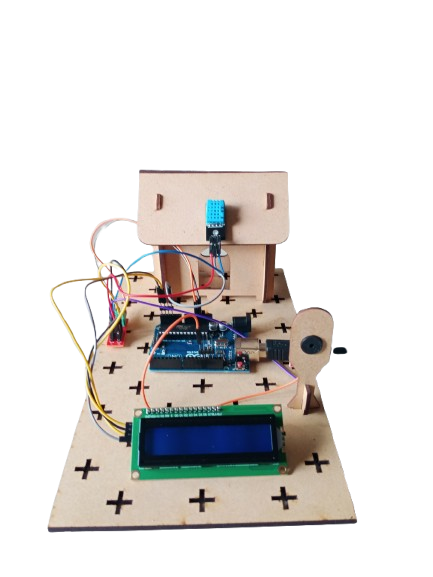
A Room Temperature Monitoring System measures and displays the temperature inside a room and alerts the user when it goes above or below preset limits. It ensures comfort, safety, and energy-efficient temperature control.
-
 ₹20,880.00
 -
 ₹15,660.00
 -
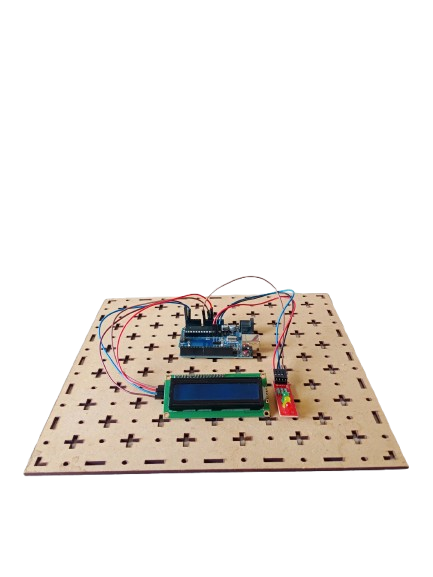
A Traffic Light Signal is an electronic project designed to manage vehicle and pedestrian traffic at intersections. Using Arduino, LEDs (Red, Yellow, Green), and an LCD, the system simulates real-world traffic light behavior, displaying signal changes with appropriate timing. This project demonstrates traffic management, embedded system programming, and microcontroller-based automation.
Related products
-
 ₹5,241.00
 -

-
For Numato Products Price details/ quotation please mail your requirements on dolphinlabs17@gmail.com
₹4,245.00 -
 ₹7,321.00
 -
 ₹4,745.00
 -