
Out Of Stock


Description
For Numato Products Price details/ quotation please mail your requirements on dolphinlabs17@gmail.com
ELBERT V2 is a simple but versatile FPGA Learning/Development board featuring AMD S3A FPGA. An excellent choice for beginners and advanced learners for experimenting and learning system design with FPGAs. This development board features AMD XC3S50A 144-pin FPGA with a maximum of 108 user IOs (Some IOs are dedicated to the system and peripherals). USB interface provides a fast and easy configuration download to the onboard SPI flash. You don’t need a programmer or special downloader cable to download Bitstream to Elbert. ELBERT V2 features a stable clock source that is derived from the onboard configuration controller. ELBERT V2 incorporates LEDs, switches, and other peripherals for curious users to get started with the “Hello World” program in a matter of minutes.
Features
- FPGA: AMD Spartan XC3S50A in TQG144 package
- Flash memory: 16 Mb SPI flash memory (M25P16)
- USB 2.0 interface for On-board flash programming
- FPGA configuration via JTAG and USB
- 8 LEDs, Six Push Buttons, and 8 way DIP switch for user-defined application
- VGA output
- Stereo audio out
- Micro SD Card Adapter
- Three Seven Segment Displays
- 39 IOs for user-defined purposes
- On-board voltage regulators for single power rail operation
- RoHS Compliant
Applications
- Product Prototype Development
- Home Networking
- Signal Processing
- Wired and Wireless Communications
- Educational tool for schools and universities
-
 ₹20,718.00
 -
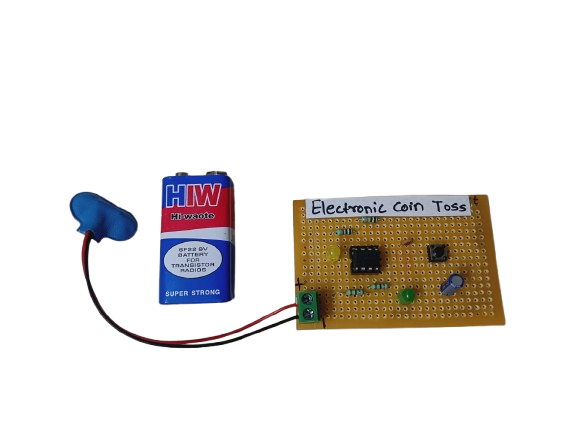
An Electronic Coin Toss circuit is an electronic version of the classic coin flip — often used to make quick decisions, settle disputes, or play games. It mimics the randomness of a real coin toss using digital logic or a microcontroller to generate a pseudo-random result and display it using LEDs or a text display (e.g., “Heads” or “Tails”).
₹160.00 -
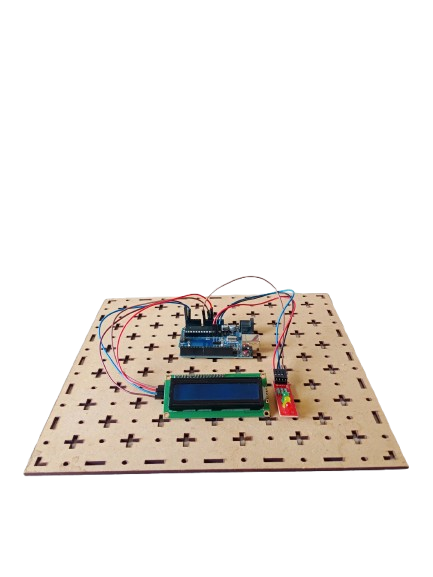
A Traffic Light Signal is an electronic project designed to manage vehicle and pedestrian traffic at intersections. Using Arduino, LEDs (Red, Yellow, Green), and an LCD, the system simulates real-world traffic light behavior, displaying signal changes with appropriate timing. This project demonstrates traffic management, embedded system programming, and microcontroller-based automation.
-

-
 ₹2,665.00

Related products
-
 ₹4,745.00
 -
For Numato Products Price details/ quotation please mail your requirements on dolphinlabs17@gmail.com
₹8,785.00 -
 ₹5,241.00
 -
 ₹4,243.00
 -
 ₹5,241.00

