Electronic Coin Toss
₹160.00
In StockAn Electronic Coin Toss circuit is an electronic version of the classic coin flip — often used to make quick decisions, settle disputes, or play games. It mimics the randomness of a real coin toss using digital logic or a microcontroller to generate a pseudo-random result and display it using LEDs or a text display (e.g., “Heads” or “Tails”).
Description
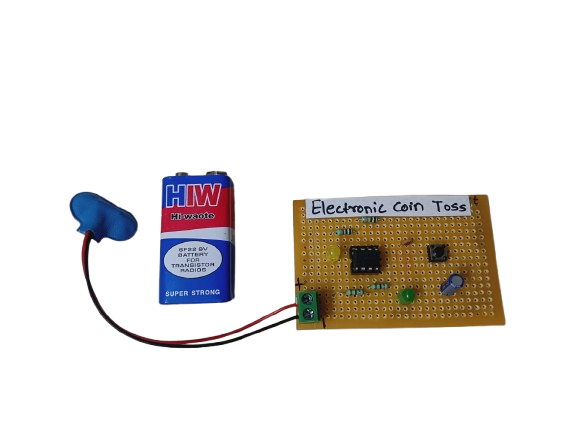
An Electronic Coin Toss circuit is an electronic version of the classic coin flip — often used to make quick decisions, settle disputes, or play games. It mimics the randomness of a real coin toss using digital logic or a microcontroller to generate a pseudo-random result and display it using LEDs or a text display (e.g., “Heads” or “Tails”).
Basic Working Principle:
1.A push-button switch is used to “toss” the coin.
2.Pressing the button triggers a circuit (based on timing or random logic) that rapidly alternates between two states — like a coin flipping.
3.When the button is released, the circuit freezes on either state randomly — representing Heads or Tails.
4.The result is indicated using two LEDs (e.g., Green for Heads, Red for Tails) or a display.
The Electronic Coin Toss is a simple, fun, and educational project that replaces a physical coin with digital logic or microcontroller-based randomness. It’s ideal for learning basic electronics, understanding random number generation, and creating a useful and entertaining tool.
Related products
-
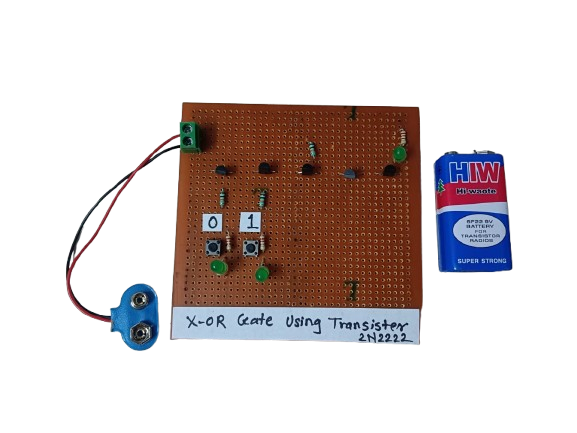
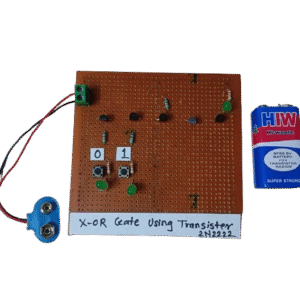
An XOR (Exclusive OR) gate is a digital logic gate that outputs true (1) only when the number of true inputs is odd. For two inputs, the output is high when the inputs are different. XOR gates can be constructed using basic logic gates or directly with transistors (BJT or MOSFET). Using transistors, we can design compact, efficient circuits for custom digital logic applications.
₹160.00 -
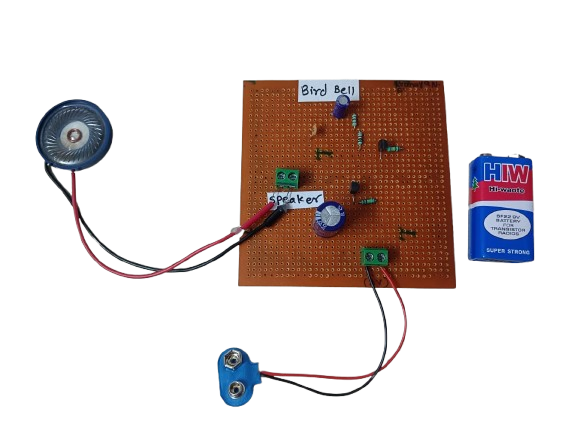
A Bird Bell is a device designed to either attract, entertain, or repel birds, depending on its purpose and context. Traditionally, it is a small bell-shaped object made of metal, ceramic, or wood, and is usually hung in gardens, balconies, farms, or near bird feeders. Its name comes from its interaction with birds — it may ring when birds land on it, brush past it, or when the wind causes it to move.
₹190.00 -
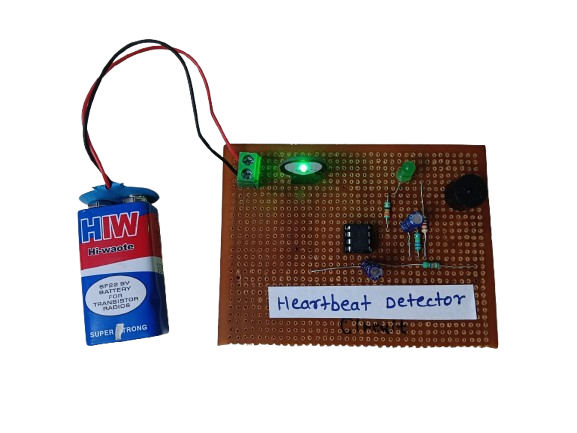
A heartbeat detector is an essential device for monitoring heart health, providing real-time data about a person’s pulse rate. Whether in a hospital, gym, or a DIY electronics project, it demonstrates how biomedical signals can be measured and processed using sensors and electronics. It’s a valuable tool for both personal health awareness and professional medical diagnostics.
₹450.00 -
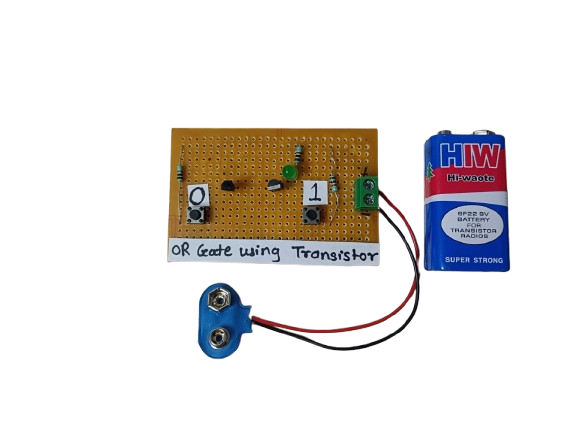
An OR gate using transistors is a basic logic circuit built using NPN transistors that performs the logical OR function. It gives a high output when at least one input is high. This is a fundamental building block in digital electronics and can be implemented using discrete components like transistors and resistors.
₹145.00 -
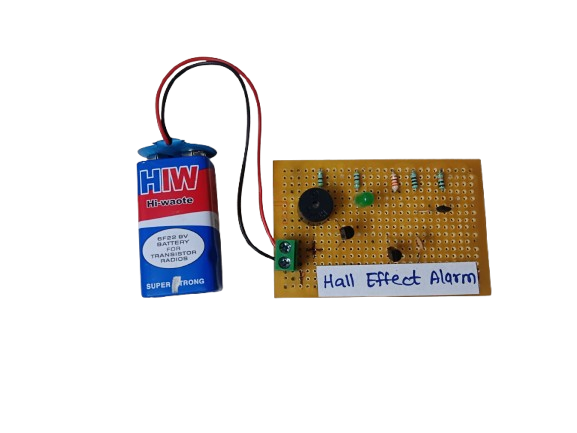
A Hall Effect Alarm is a type of security or position-detection system that uses a Hall Effect sensor to detect the presence or movement of a magnet. When the magnetic field changes (such as a magnet being removed or moved), the circuit triggers an alarm (buzzer, LED, relay, etc.).
₹210.00 -
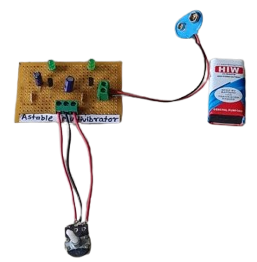
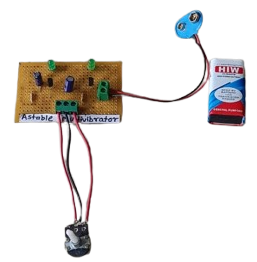
An Astable Multivibrator is an electronic oscillator circuit that continuously switches between two states without any external triggering. It produces a continuous square wave, making it ideal for generating clock pulses, timing signals, and blinking LEDs.