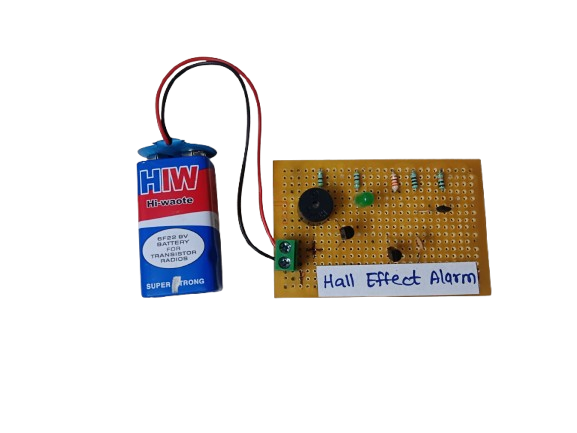
Hall Effect Alarm
₹210.00
In StockA Hall Effect Alarm is a type of security or position-detection system that uses a Hall Effect sensor to detect the presence or movement of a magnet. When the magnetic field changes (such as a magnet being removed or moved), the circuit triggers an alarm (buzzer, LED, relay, etc.).
Description
The Hall Effect sensor detects magnetic fields and converts them into electrical signals. It’s commonly used in:
- Proximity sensors
- Speed sensors
- Position detectors
- Security systems
In a Hall Effect alarm system, a magnet is placed near the Hall sensor. As long as the magnet is near, the sensor maintains a stable output (either HIGH or LOW depending on sensor type). If the magnet is removed, the sensor’s output changes, which triggers an alarm, such as a buzzer or LED. This type of system is widely used in door security, lock systems, and industrial safety applications.
Applications:
1.Door or Window Alarms
1.Magnet on door, sensor on frame — removing the magnet triggers the alarm.
2.Locker or Safe Security
1.Alarm triggers when magnetic field is disturbed (indicating opening).
3.Speed or Position Sensing
1.Magnet attached to rotating object; sensor detects movement.
4.Industrial Equipment Monitoring
1.Ensures safety by detecting unexpected movement or opening.
5.Bicycle Theft Detectors
Alarm when magnetic lock is tampered.
-
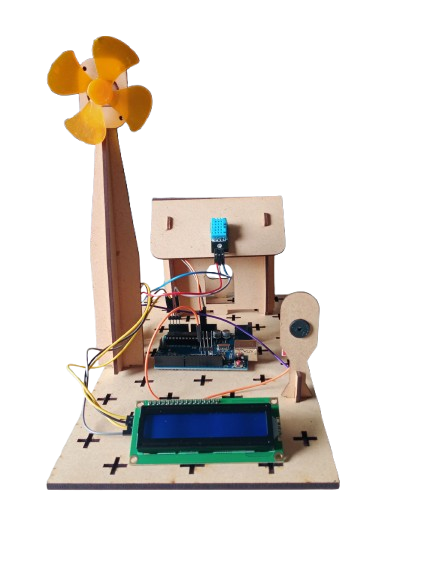
An Automatic Room Cooling is an electronic system designed to maintain a comfortable room temperature automatically. It uses a DHT11 temperature sensor to monitor the room, a DC fan for cooling, an LCD to display real-time data, and a buzzer to provide alerts. The system activates the fan automatically when the room temperature exceeds a set threshold, making it an efficient solution for homes, laboratories, and small offices.
-
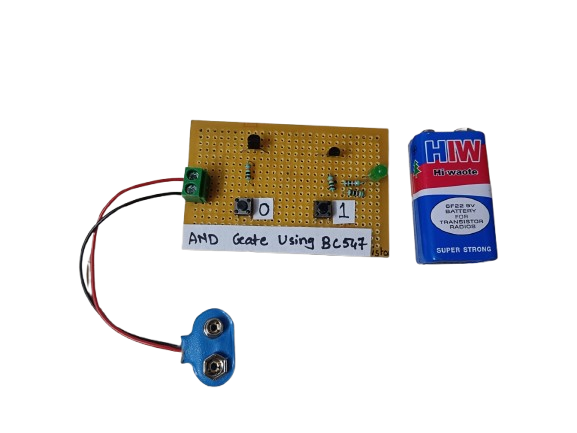
An AND gate can be built using BC547 NPN transistors, a common general-purpose transistor used in digital circuits.
The circuit represents both the inputs A & B for the AND gate and Output, Q, which also has a +5V supply to the collector of the first transistor, which is connected in series to the second transistor, and an LED is connected to the emitter terminal of the second transistor. The inputs A & B are connected to the base terminal of Transistor 1 and Transistor 2, respectively, and the output Q goes to the positive terminal LED.
₹190.00 -

- A rain alert system with an LCD display and buzzer, controlled by an 8051 microcontroller, is designed to detect rainfall and provide real-time notifications. The system uses a rain sensor to detect moisture or rainfall, and the microcontroller processes the sensor data. When rain is detected, the 8051 triggers a buzzer to alert the user audibly and displays the rain status on an LCD screen.
-

A Ultrasonic Distance Measurement System using Arduino and an ultrasonic sensor that calculates the distance of an object based on the reflection time of ultrasonic waves and displays the result on the serial monitor.
-
 ₹15,559.00
 -
 ₹15,559.00
Related products
-
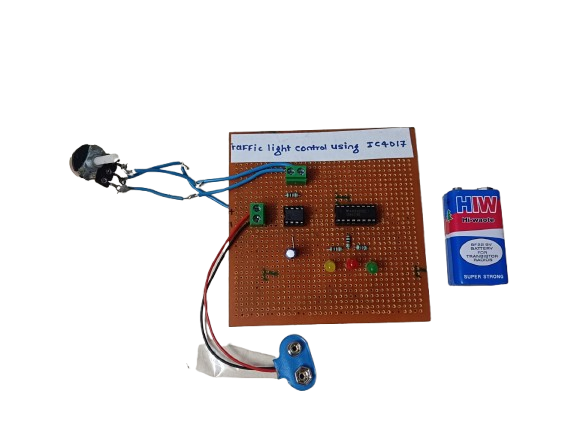
A traffic light control circuit using IC CD4017 is a simple digital electronics project that mimics the working of a real traffic light system. It uses the CD4017 decade counter IC along with a timer (usually 555 IC) to sequentially switch Red, Yellow, and Green LEDs, simulating the flow of traffic signals.
₹250.00 -
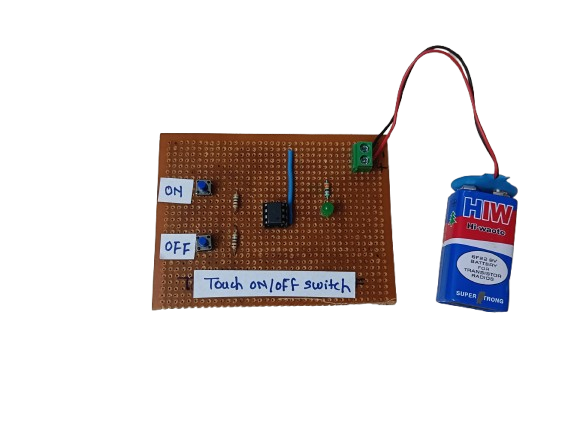
A Touch ON/OFF Switch is an electronic circuit that allows a device to be turned on or off by simply touching a sensor pad or wire, instead of using a mechanical switch. It works by detecting a small electrical signal from the human body (capacitive or resistive touch) and using that to toggle the output state.
These switches are commonly used in modern electronics, home automation, and DIY projects due to their durability, aesthetic appeal, and user-friendly operation.
₹150.00 -
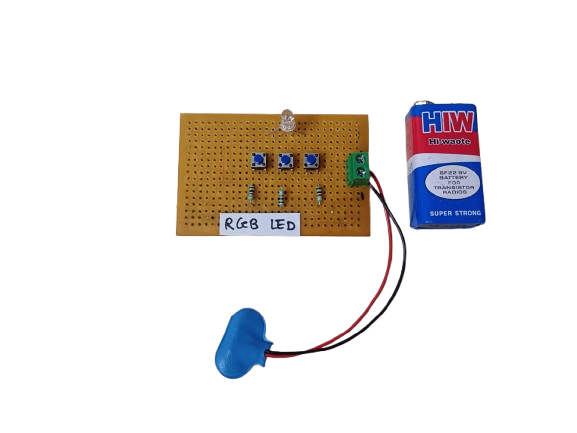
An RGB LED is a light-emitting diode that combines Red, Green, and Blue LEDs in a single package. By adjusting the brightness of each color, it can produce millions of colors, making it ideal for decorative lighting, displays, and indicators.
₹140.00 -
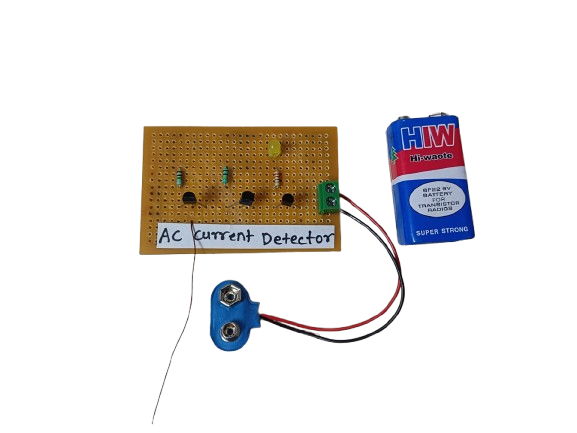
An AC Current Detector is a device or circuit that senses the flow of alternating current (AC) through a wire or appliance. It typically uses components like a current transformer (CT) or hall effect sensor to detect AC current and activate an indicator such as an LED or buzzer.
₹180.00 -
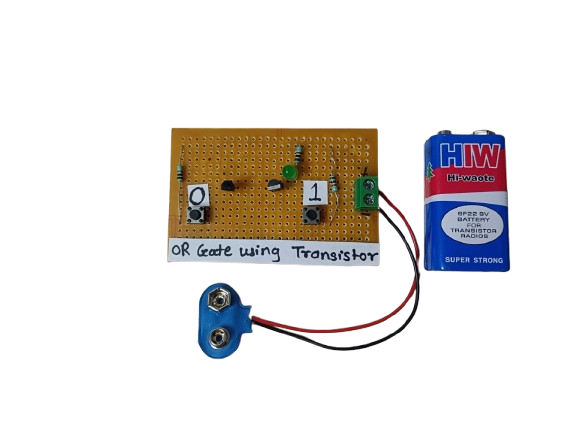
An OR gate using transistors is a basic logic circuit built using NPN transistors that performs the logical OR function. It gives a high output when at least one input is high. This is a fundamental building block in digital electronics and can be implemented using discrete components like transistors and resistors.
₹145.00 -
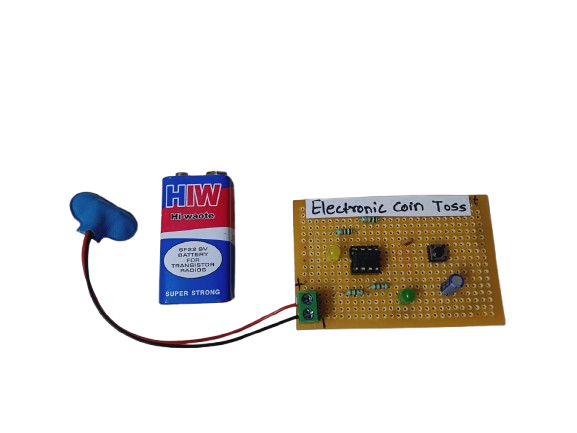
The Electronic Coin Toss is a simple, fun, and educational project that replaces a physical coin with digital logic or microcontroller-based randomness. It’s ideal for learning basic electronics, understanding random number generation, and creating a useful and entertaining tool.
₹190.00