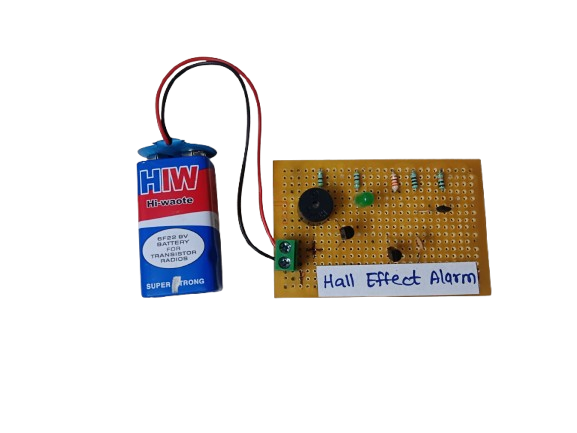
Hall Effect Alarm

₹210.00
In StockA Hall Effect Alarm is a type of security or position-detection system that uses a Hall Effect sensor to detect the presence or movement of a magnet. When the magnetic field changes (such as a magnet being removed or moved), the circuit triggers an alarm (buzzer, LED, relay, etc.).
Description
The Hall Effect sensor detects magnetic fields and converts them into electrical signals. It’s commonly used in:
- Proximity sensors
- Speed sensors
- Position detectors
- Security systems
In a Hall Effect alarm system, a magnet is placed near the Hall sensor. As long as the magnet is near, the sensor maintains a stable output (either HIGH or LOW depending on sensor type). If the magnet is removed, the sensor’s output changes, which triggers an alarm, such as a buzzer or LED. This type of system is widely used in door security, lock systems, and industrial safety applications.
Applications:
1.Door or Window Alarms
1.Magnet on door, sensor on frame — removing the magnet triggers the alarm.
2.Locker or Safe Security
1.Alarm triggers when magnetic field is disturbed (indicating opening).
3.Speed or Position Sensing
1.Magnet attached to rotating object; sensor detects movement.
4.Industrial Equipment Monitoring
1.Ensures safety by detecting unexpected movement or opening.
5.Bicycle Theft Detectors
Alarm when magnetic lock is tampered.
-
 ₹9,402.00
 -

A Soil Moisture Detection System using Arduino, a soil moisture sensor, and a buzzer that sounds an alert when soil moisture is detected.
-
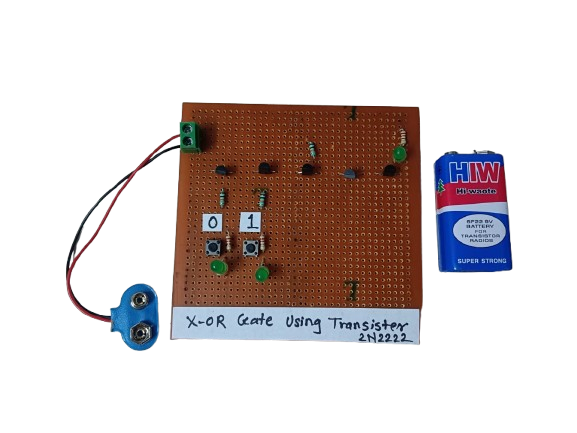
An XOR (Exclusive OR) gate is a digital logic gate that outputs true (1) only when the number of true inputs is odd. For two inputs, the output is high when the inputs are different. XOR gates can be constructed using basic logic gates or directly with transistors (BJT or MOSFET). Using transistors, we can design compact, efficient circuits for custom digital logic applications.
₹160.00 -

The Conveyor Belt Object Counter using LDR and 7-Segment Display with the 8051 microcontroller is designed to count objects passing in front of an LDR (Light Dependent Resistor) sensor. The system works by detecting light interruptions when an object crosses the sensor, causing a change in the LDR’s resistance. The microcontroller processes this change and increments an object count. The count is then displayed on a 7-segment display.
-
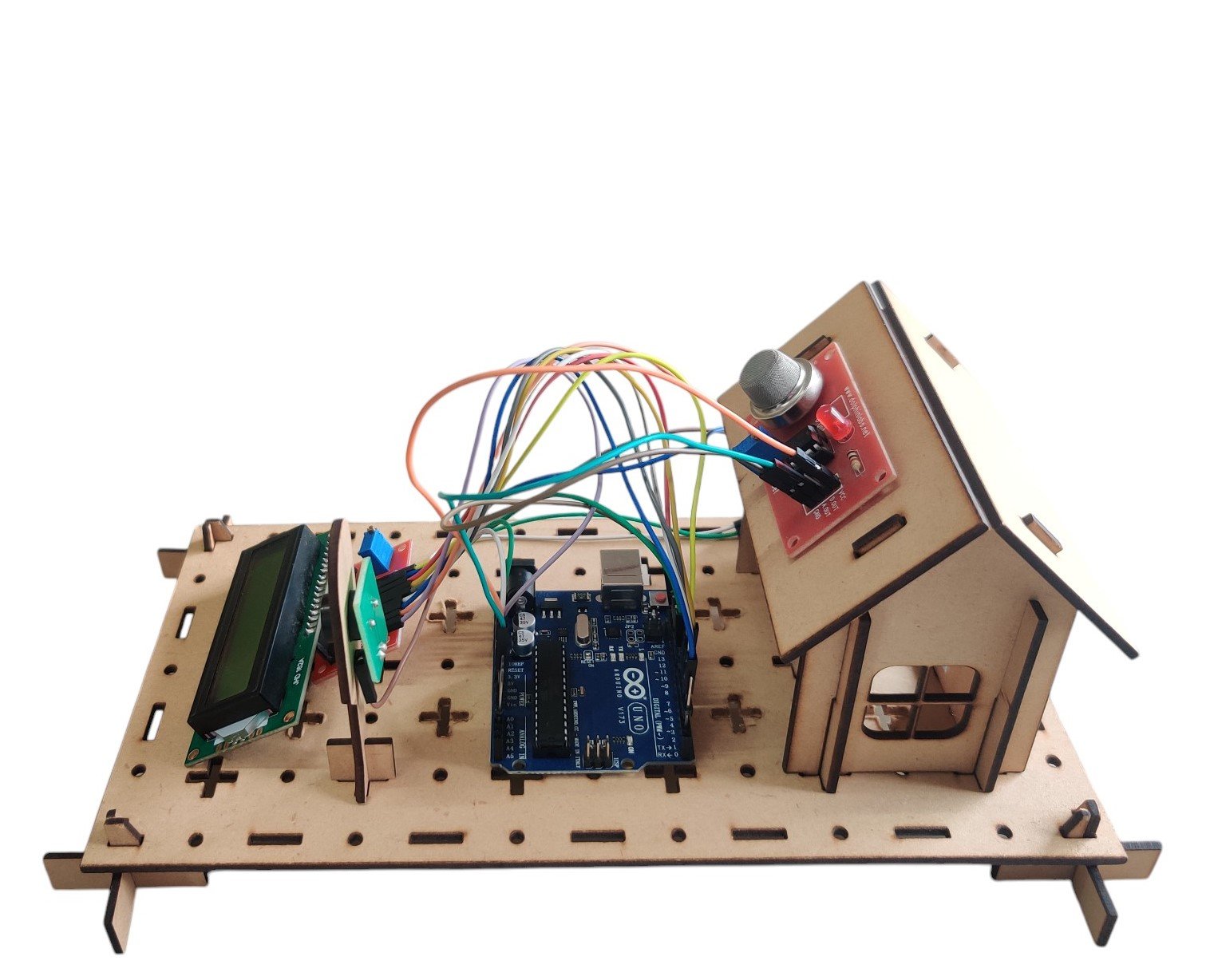
An Arduino-based smoke detection system using an MQ-3 sensor, buzzer, and LCD display to alert users when smoke or harmful gases are detected.
₹1,450.00

Related products
-
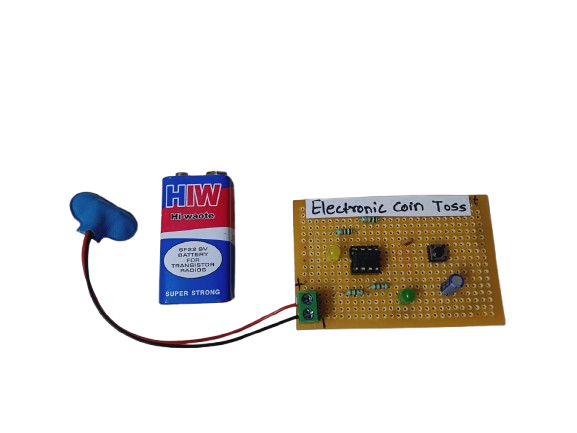
The Electronic Coin Toss is a simple, fun, and educational project that replaces a physical coin with digital logic or microcontroller-based randomness. It’s ideal for learning basic electronics, understanding random number generation, and creating a useful and entertaining tool.
₹190.00 -
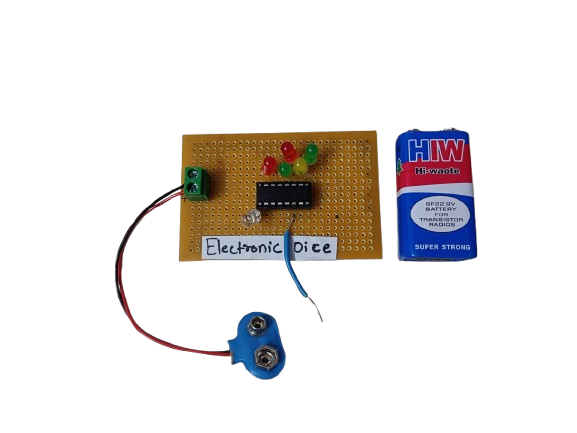
An Electronic Dice is a digital version of a traditional dice, which generates a random number (1 to 6) and displays it using LEDs or a 7-segment display. It uses components like a 555 timer, counter IC (like CD4017), or microcontrollers such as Arduino to simulate dice rolls electronically.
₹190.00 -
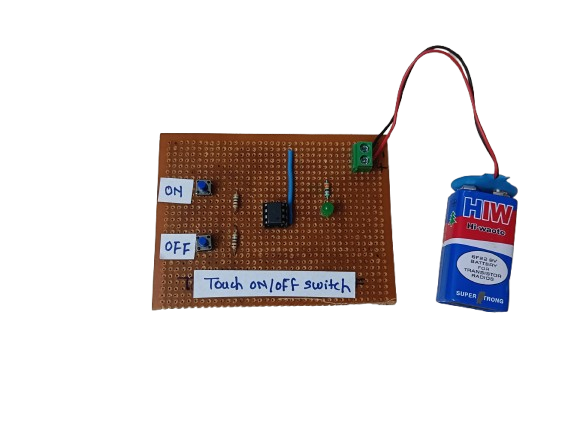
A Touch ON/OFF Switch is an electronic circuit that allows a device to be turned on or off by simply touching a sensor pad or wire, instead of using a mechanical switch. It works by detecting a small electrical signal from the human body (capacitive or resistive touch) and using that to toggle the output state.
These switches are commonly used in modern electronics, home automation, and DIY projects due to their durability, aesthetic appeal, and user-friendly operation.
₹150.00 -
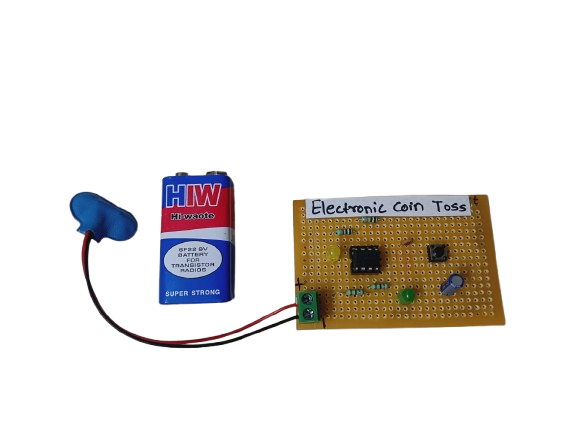
An Electronic Coin Toss circuit is an electronic version of the classic coin flip — often used to make quick decisions, settle disputes, or play games. It mimics the randomness of a real coin toss using digital logic or a microcontroller to generate a pseudo-random result and display it using LEDs or a text display (e.g., “Heads” or “Tails”).
₹160.00 -
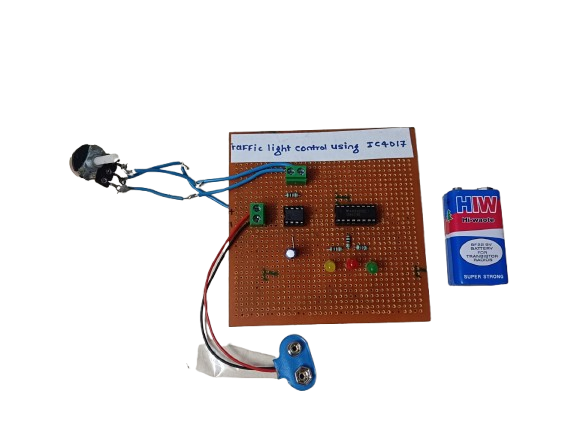
A traffic light control circuit using IC CD4017 is a simple digital electronics project that mimics the working of a real traffic light system. It uses the CD4017 decade counter IC along with a timer (usually 555 IC) to sequentially switch Red, Yellow, and Green LEDs, simulating the flow of traffic signals.
₹250.00 -
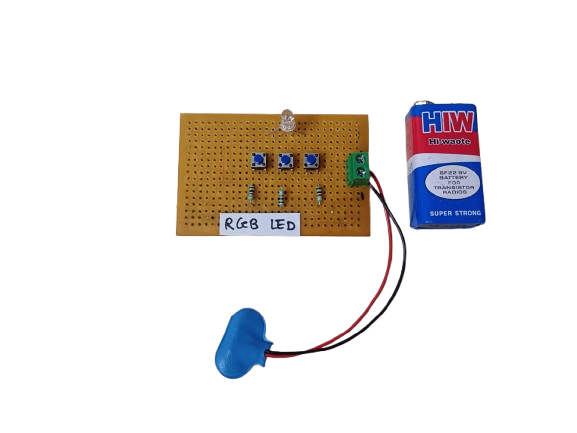
An RGB LED is a light-emitting diode that combines Red, Green, and Blue LEDs in a single package. By adjusting the brightness of each color, it can produce millions of colors, making it ideal for decorative lighting, displays, and indicators.
₹140.00