NOT Gate Using Transistor

In Stock
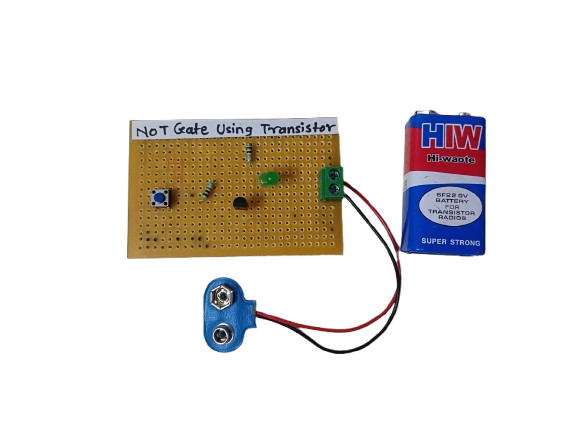
A NOT gate (or inverter) using a transistor is a simple digital logic circuit that outputs the opposite of the input signal. If the input is HIGH (1), the output is LOW (0), and vice versa. It’s built using a single NPN transistor and a few passive components.
Description
The NOT gate, also known as an inverter, is a fundamental digital logic gate that outputs the logical complement of its input. Implementing a NOT gate using a transistor is a basic and educational way to understand how logic gates function at the hardware level.
In a transistor-based NOT gate:
- When the input is HIGH (logic 1), the transistor turns ON, creating a path to ground, so the output is pulled LOW (logic 0).
- When the input is LOW (logic 0), the transistor remains OFF, and the output stays HIGH via a pull-up resistor.
Applications:
- Basic Logic Circuits
- Used in building more complex logic gates.
- Signal Inversion
- Inverts control signals in microcontroller or digital circuits.
- Microcontroller Interfaces
- Convert active-high signals to active-low and vice versa.
- Educational Purposes
- Demonstrates how digital logic works at the hardware level.
- Noise Filtering :-In some cases, helps clean up signals before processing.
Related products
-
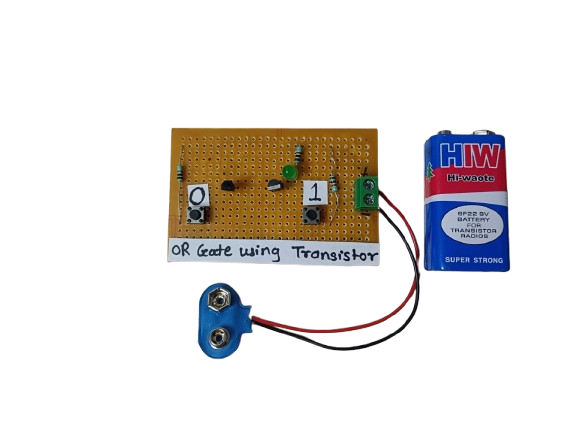
An OR gate using transistors is a basic logic circuit built using NPN transistors that performs the logical OR function. It gives a high output when at least one input is high. This is a fundamental building block in digital electronics and can be implemented using discrete components like transistors and resistors.
₹145.00 -

A Water Level Indicator is an electronic device used to detect and display the level of water in a tank or reservoir. It helps prevent overflow and dry running of pumps by giving alerts or showing water levels in real time.
₹170.00 -
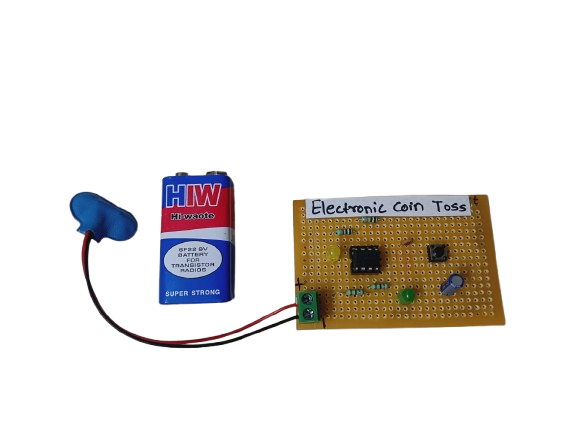
An Electronic Coin Toss circuit is an electronic version of the classic coin flip — often used to make quick decisions, settle disputes, or play games. It mimics the randomness of a real coin toss using digital logic or a microcontroller to generate a pseudo-random result and display it using LEDs or a text display (e.g., “Heads” or “Tails”).
₹160.00 -
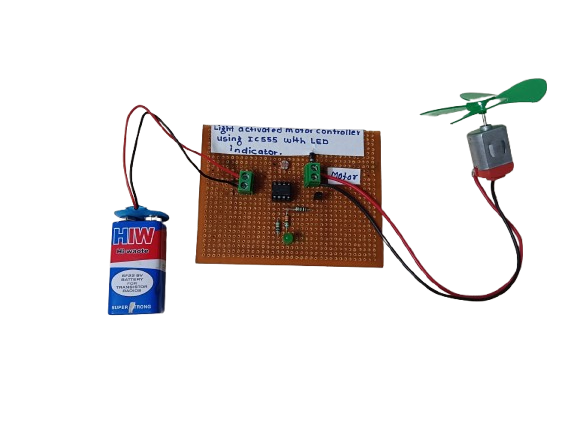
A Light Activated Motor Controller using IC 555 is a simple electronic circuit that turns a motor ON or OFF based on the presence or absence of light. It uses a LDR (Light Dependent Resistor) as a light sensor and the 555 timer IC in a comparator mode, along with an LED to indicate the motor’s status.
₹280.00 -
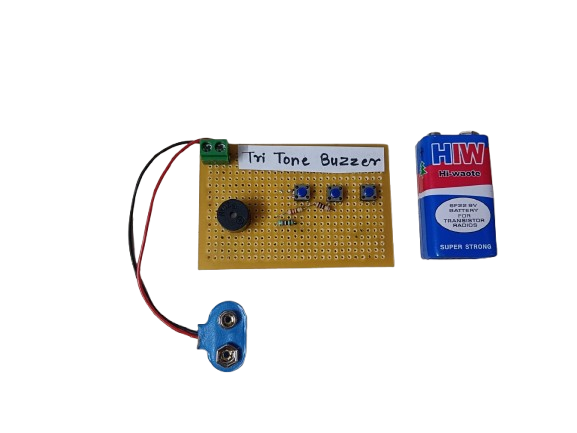
A Tri-Tone Buzzer is an audio signaling device that produces three distinct tones in a sequence or pattern. It’s commonly used in alarms, emergency systems, and attention-grabbing devices to indicate different conditions or alert levels.
₹180.00 -
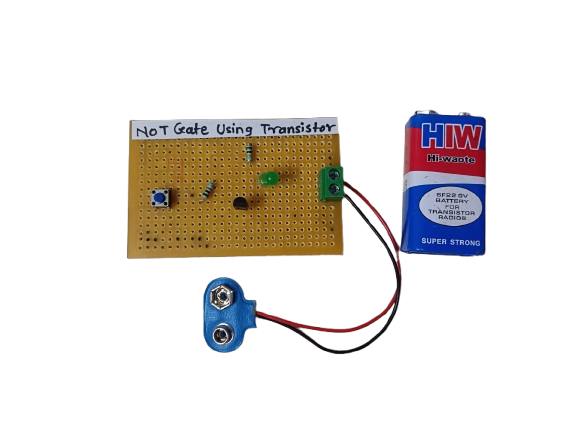
A NOR gate using transistors is a basic digital logic circuit that outputs HIGH (1) only when all inputs are LOW (0). It’s built by combining an OR gate followed by a NOT gate, using simple NPN transistors.
₹150.00