Panic Alarm Button

₹160.00
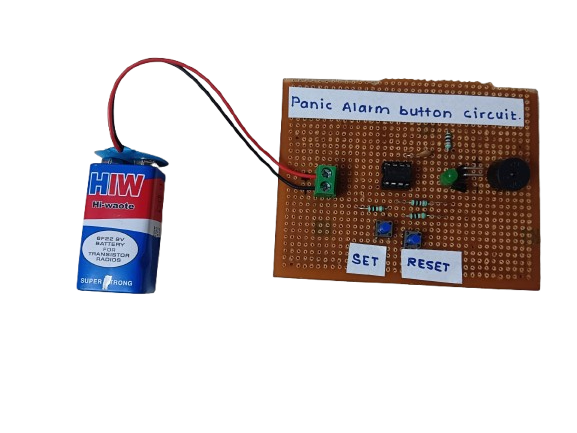
In StockA Panic Alarm Button is a simple safety device that, when pressed, immediately activates a loud alarm, buzzer, or alert system to signal an emergency or request for help. It’s commonly used in homes, banks, hospitals, and personal security systems.
Description
The Panic Alarm Button is a compact, user-activated emergency alert device. When someone feels threatened, is in distress, or needs urgent help, pressing the panic button instantly triggers an audible or visual alert. The system is simple to build using basic electronics: a push-button switch connected to a buzzer or siren circuit.
In more advanced systems, the button can also trigger a wireless signal, send SMS alerts via a GSM module, or connect to an IoT or security system. However, even a basic version with a loud buzzer can be life-saving in emergencies by drawing attention or scaring off intruders.
Applications:
1.Home Security
1.Easily alert neighbours or authorities when in danger.
2.Bank & ATM Security
1.Silent panic buttons under counters.
3.Hospitals & Elderly Care
1.Emergency call buttons for patients or seniors.
4.Schools
1.Panic alarms in classrooms for emergencies.
5.Wearables
1.Portable panic button devices with buzzers or wireless alert systems.
6.DIY Projects
1.For learning and building personal safety or alert devices.
Related products
-
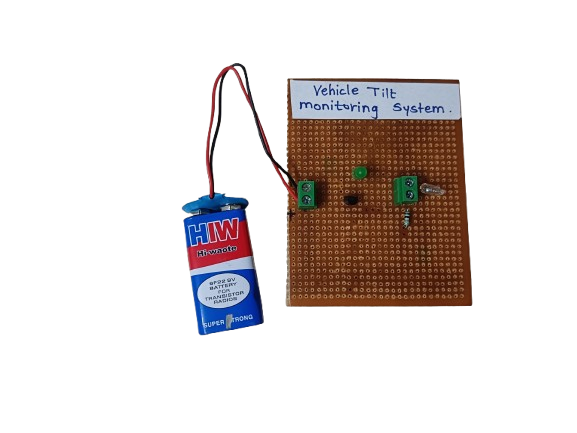
A Vehicle Tilt Monitoring System is an electronic safety system that detects abnormal tilting or leaning of a vehicle, such as when it is on a slope, at risk of tipping, or has experienced an impact. It alerts the driver or shuts down the system to prevent accidents.
₹185.00 -
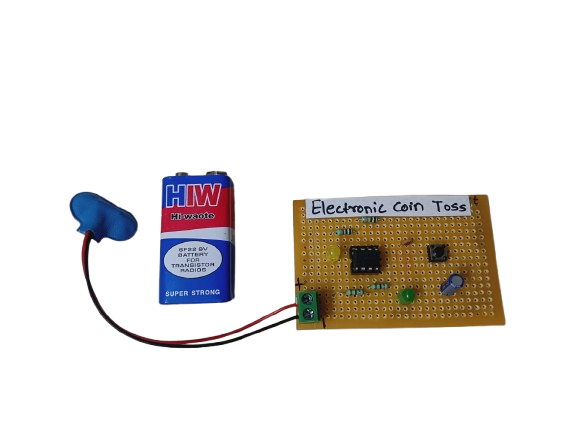
An Electronic Coin Toss circuit is an electronic version of the classic coin flip — often used to make quick decisions, settle disputes, or play games. It mimics the randomness of a real coin toss using digital logic or a microcontroller to generate a pseudo-random result and display it using LEDs or a text display (e.g., “Heads” or “Tails”).
₹160.00 -
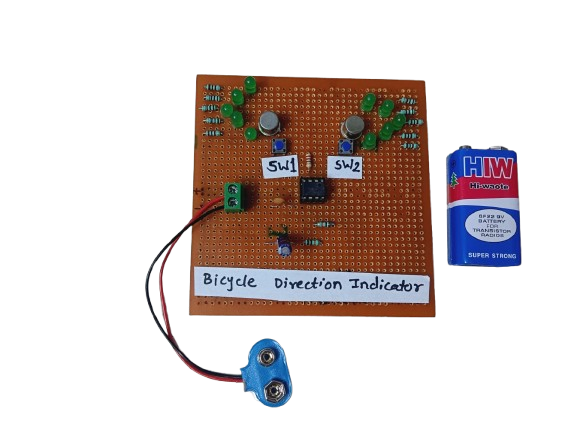
A Bicycle Direction Indicator is a safety system that uses LEDs or blinkers to signal the rider’s left or right turn intentions, just like car indicators. It’s often controlled by push buttons, switches, or microcontrollers.
₹180.00 -
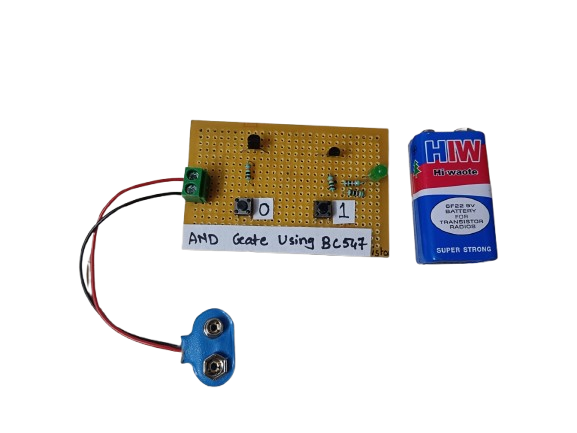
An AND gate can be built using BC547 NPN transistors, a common general-purpose transistor used in digital circuits.
The circuit represents both the inputs A & B for the AND gate and Output, Q, which also has a +5V supply to the collector of the first transistor, which is connected in series to the second transistor, and an LED is connected to the emitter terminal of the second transistor. The inputs A & B are connected to the base terminal of Transistor 1 and Transistor 2, respectively, and the output Q goes to the positive terminal LED.
₹190.00 -
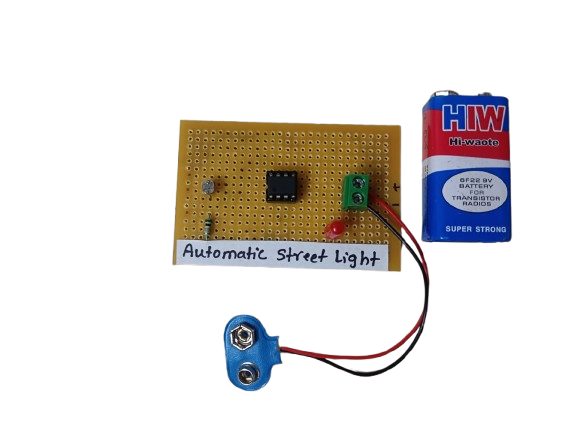
An Automatic Street Light using the IC 555 is a simple circuit that turns street lights ON at night and OFF during the day automatically. It uses a Light Dependent Resistor (LDR) to detect ambient light and a 555 Timer IC configured in comparator mode to control the switching.
₹175.00 -
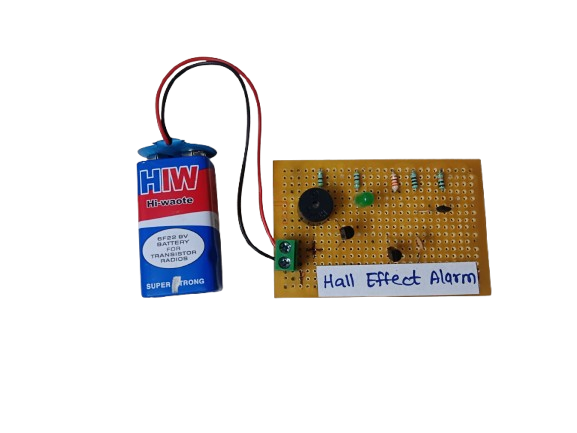
A Hall Effect Alarm is a type of security or position-detection system that uses a Hall Effect sensor to detect the presence or movement of a magnet. When the magnetic field changes (such as a magnet being removed or moved), the circuit triggers an alarm (buzzer, LED, relay, etc.).
₹210.00