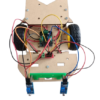

Photo Phobic Robot
₹1,250.00
In StockPhoto phobic robot will sense the light and will try to move away from light. On the contrary photo phobic is exactly opposite where it does not follow the light or more precisely it avoids and goes to places where there is less light
Description
A photo-phobic robot is a type of robot that is designed to avoid light or bright . Using light sensors, it detects sources of light and moves away from them to find darker areas. This behavior mimics photo-phobia, a condition where living organisms avoid light. Photo-phobic robots are useful in scenarios where light exposure needs to be minimized, such as in dark or low-light environments, for research purposes, or for testing in areas sensitive to light. They can also be used in applications like automated light-sensitive systems, smart lighting, and certain types of security or surveillance robots that function best in low-light conditions.
Here are some applications of photo-phobic robots:
- Nighttime Surveillance: Photo-phobic robots can be used in security systems that operate in low-light conditions. They avoid bright lights, allowing them to navigate stealthily through dark areas for monitoring or patrolling.
- Astronomical Research: These robots can be used in observatories or research environments where exposure to light needs to be minimized. They can move away from bright lights, protecting sensitive equipment and ensuring a controlled dark environment.
- Underground Exploration: In mines or underground areas where natural light is limited, photo-phobic robots can navigate by avoiding light sources, making them ideal for search and rescue or mapping in dark, confined spaces.
- Photography or Filming: In professional photography, photo-phobic robots can assist in capturing shots by avoiding lighting setups or cameras’ bright lights, helping in dynamic filming setups where lighting sensitivity is key.
- Biological or Environmental Research: These robots can be used to study ecosystems where light exposure affects animal behavior or plant growth. By avoiding light, they can be employed in experiments where controlling light exposure is crucial.
- Smart Lighting Systems: Photo-phobic robots can be integrated into smart home or building systems to automatically adjust lighting based on the robot’s presence and movement, ensuring efficient energy use by avoiding unnecessary light exposure.
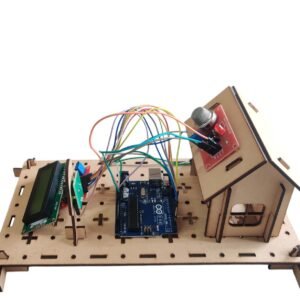
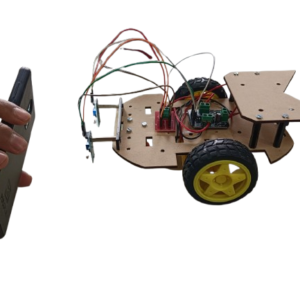
Related products
-
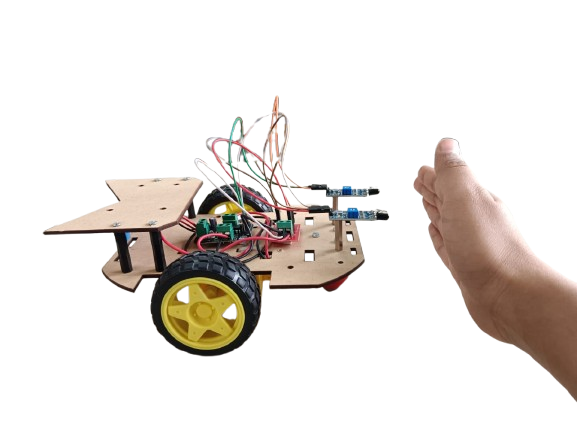
The basic function of this robot is simple, it follows object. It goes forward as you go forward; goes backward as you go backward; turns left/right as you turn left/right.
₹1,250.00 -

An object-avoidance robot is a type of autonomous robot designed to detect and avoid obstacles.
₹1,250.00 -

The term photo maniac implies attraction towards light. These robots actually follow the light using a set of sensors which are also called positive prototroph.
₹1,250.00