Reaction Time Game
In Stock
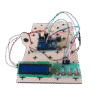
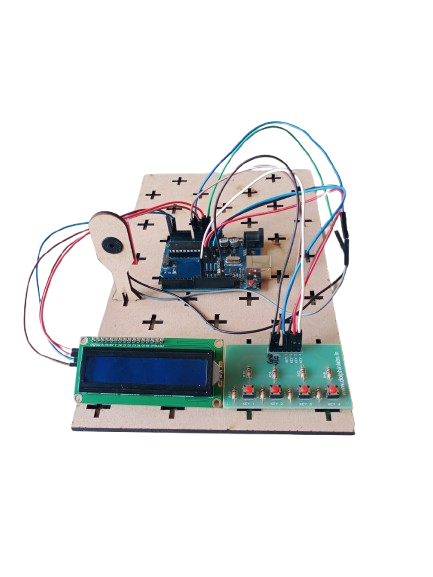
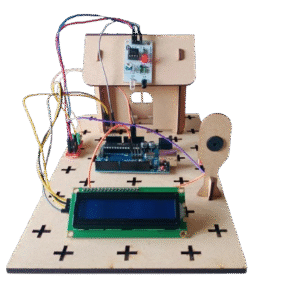
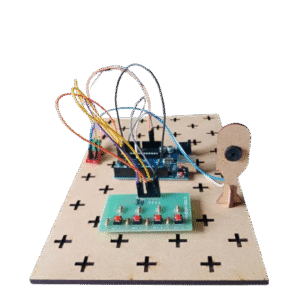
A Reaction Time Game is an interactive electronic project designed to measure a user’s response speed. Using an Arduino, keypad, buzzer, and LCD, the system tests how quickly a player can respond to a visual or auditory signal. This project is widely used in educational setups, gaming, and psychology experiments to study reflexes and reaction times.
Description
A Reaction Time Game is an electronic project designed to measure how quickly a person responds to a stimulus, such as an LED lighting up or a buzzer sounding. It uses a micro-controller board like Arduino to detect the time between the stimulus and the player’s response, often displayed in milliseconds on an LCD or LED screen. The game helps improve reflexes, hand-eye coordination, and concentration. It can be single-player or multiplayer, with options to track scores or increase difficulty. Widely used in education, gaming, and sports training, it combines fun with learning about electronics, programming, and human response measurement.
Features of Reaction Time Game
- Visual & Audio Feedback – Uses LCD and buzzer to signal the start of the game.
- Keypad Input – Players respond by pressing a specific key.
- Accurate Timing – Arduino measures the time taken to react in milliseconds.
- High Score Storage – Displays the fastest reaction time on the LCD.
- Multiple Levels – Can be programmed to increase difficulty.
- Easy Interface – Clear LCD instructions for players.
- Portable & Compact – Small setup for classroom or home use.
Applications of Reaction Time Game
- Educational Purposes – Teaching students about reflexes and human response.
- Gaming & Entertainment – Fun competitive activity to test reaction speed.
- Psychological Experiments – Measure cognitive response in research studies.
- Sports Training – Assess athletes’ reaction times.
- Rehabilitation Therapy – Help patients improve motor skills and response times.
Advantages
- Quick & Interactive – Engages users in a fun and educational way.
- Accurate Measurement – Arduino ensures precise reaction time calculation.
- Simple to Build – Low-cost components required.
- Portable – Can be set up anywhere for gaming or learning.
- Customisation – Easy to modify game difficulty or number of players.
Disadvantages
- Limited Players – Typically designed for single-player at a time.
- Hardware Dependent – Requires Arduino, keypad, buzzer, and LCD.
- Short Duration – Game sessions are brief unless programmed for multiple rounds.
- No Internet Connectivity – Standalone system unless upgraded.
- Requires Basic Programming – Arduino programming knowledge needed to modify.
Related products
-
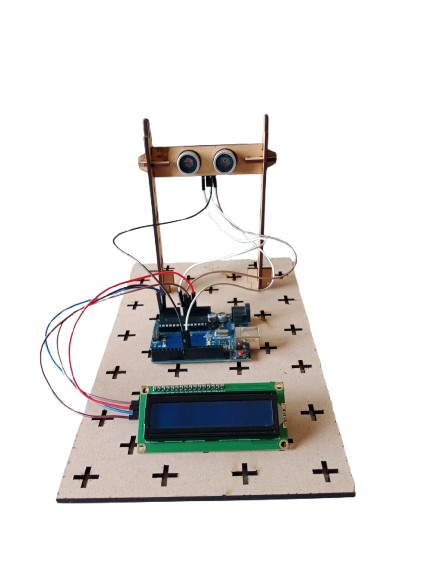
A digital ruler is an electronic measuring device that provides precise measurements of length, width, or depth. Unlike traditional rulers or tape measures, digital rulers use sensors and electronic displays (often LCD or LED) to show measurements accurately, usually in both metric (mm/cm) and imperial (inches) units. They are widely used in engineering, design, woodworking, tailoring, and education where precision is critical.
-
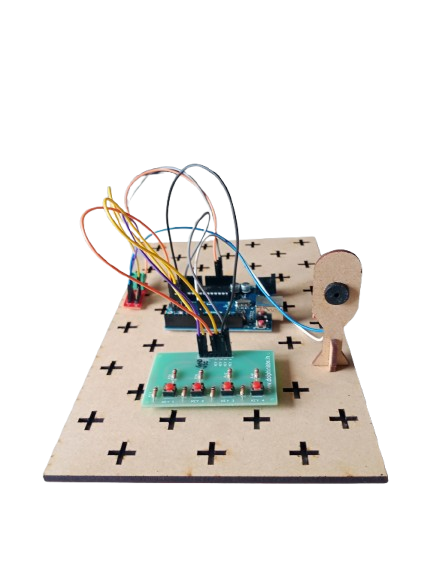
A Morse Code Generator is an electronic project designed to convert text input into Morse code signals using Arduino, a keypad, and a buzzer. Morse code is a method of encoding text characters as sequences of dots and dashes, widely used in communication systems, especially in emergency signaling and amateur radio. This project demonstrates signal encoding, microcontroller programming, and interactive electronics.
-

An Arduino-based smart fan that automatically adjusts its speed according to temperature changes using an LM35 sensor and a DC motor driver.
₹1,350.00 -

A Tank Overflow Indicator using Arduino, a water sensor, and a buzzer that alerts the user by buzzing when the water tank overflows.
-
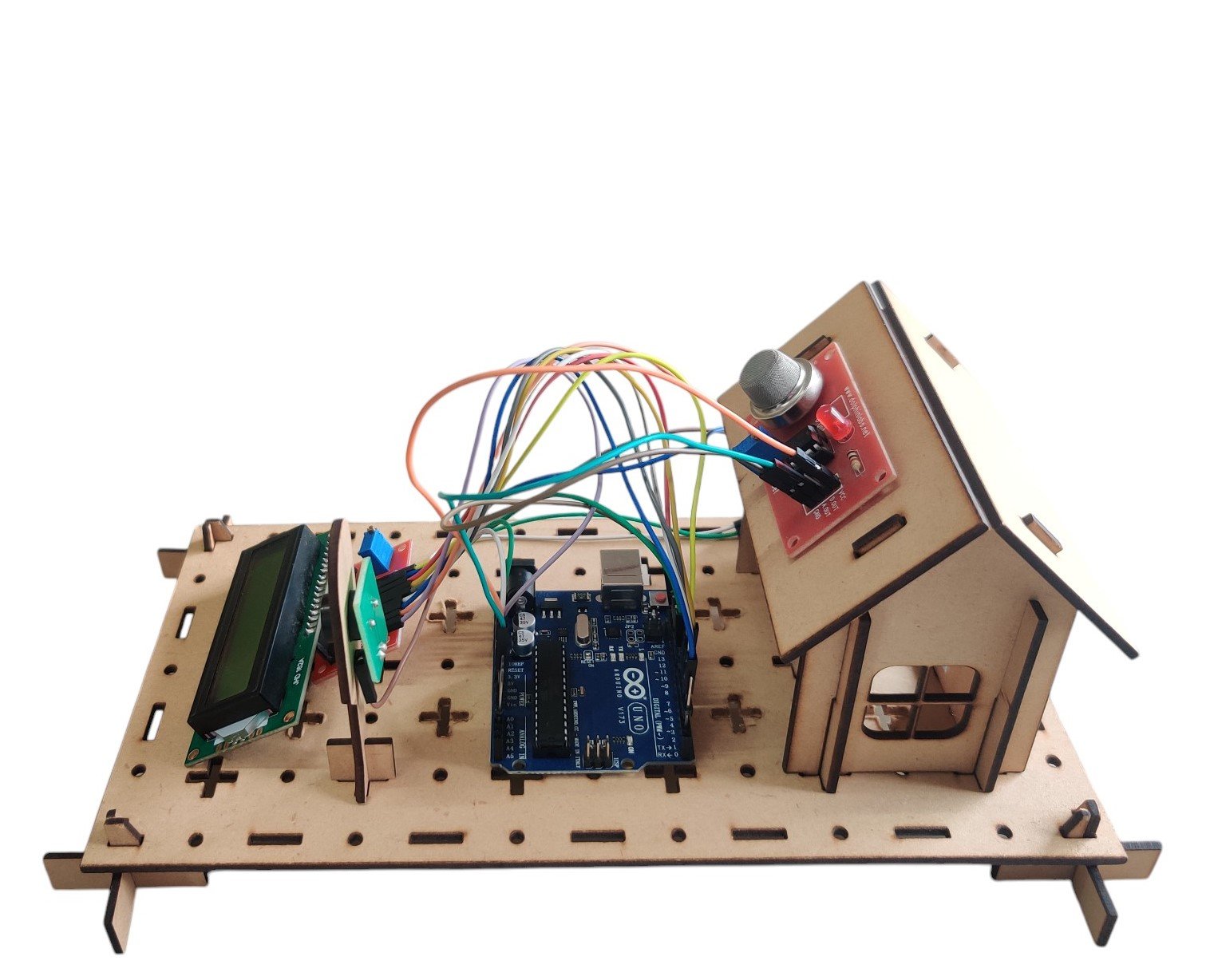
An Arduino-based smoke detection system using an MQ-3 sensor, buzzer, and LCD display to alert users when smoke or harmful gases are detected.
₹1,450.00 -

A Vibration Detection System using Arduino, a vibration sensor, and a buzzer that triggers a sound alert when vibrations or movements are detected.