
₹140.00
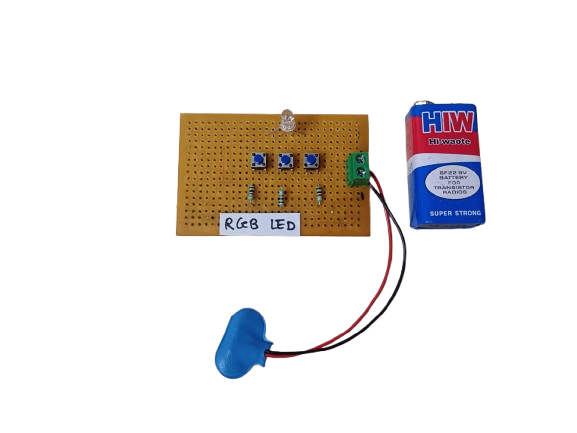
In StockAn RGB LED is a light-emitting diode that combines Red, Green, and Blue LEDs in a single package. By adjusting the brightness of each color, it can produce millions of colors, making it ideal for decorative lighting, displays, and indicators.
Description
An RGB LED is a versatile and popular lighting component used in electronics and design. It consists of three separate LEDs—Red, Green, and Blue—either in a common cathode or common anode configuration. These colors are the primary colors of light, and by mixing them in different intensities, you can generate any color in the visible spectrum.
RGB LEDs are used in everything from TVs, smart lighting, and wearable tech, to DIY Arduino projects. They allow for dynamic color control, animations, and mood lighting. RGB LEDs can be manually controlled with resistors and switches, or digitally controlled using microcontrollers (like Arduino or ESP32) with PWM (Pulse Width Modulation) to set brightness levels.
Applications:
1.Smart Lighting
1.Mood lights, color-changing bulbs, ambient light systems.
2.Displays and Signage
1.Used in LED matrix displays and billboards.
3.Status Indicators
1.Show device state (e.g., red = error, green = OK, blue = standby).
4.Wearables and Fashion
1.Used in glowing accessories and reactive clothing.
5.Home Automation
1.RGB lights controlled via phone apps or voice assistants (e.g., Alexa, Google Home).
6.Gaming and PC Builds
1.RGB fans, strips, and keyboards for visual effects.
-


This project uses a PIC18F4550 microcontroller, an LM35 temperature sensor, and an LCD display to measure and display the ambient temperature.
-
 ₹6,176.00
 -
 ₹136,940.00
 -

The Automatic Watering System provides an efficient, reliable, and convenient way to maintain soil moisture levels without human intervention. By using sensors and a microcontroller, the system ensures that plants receive the right amount of water at the right time, reducing water wastage and promoting healthy plant growth. It is an eco-friendly solution that saves time, energy, and resources, making it ideal for both domestic and agricultural use.
-
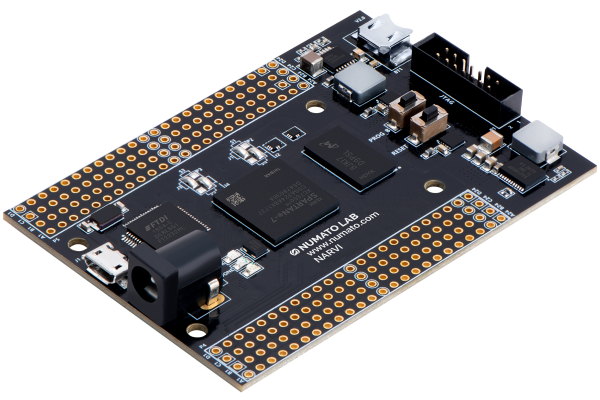 ₹17,400.00
 -
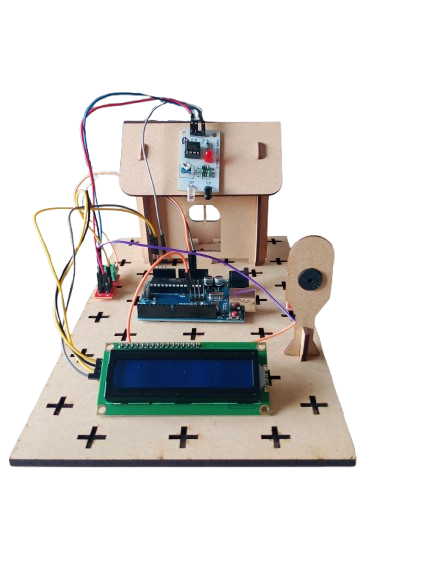
A Visitor Counter automatically counts the number of people entering or leaving a room using an IR sensor. The count is displayed on a 16×2 LCD, and a buzzer can alert when a specific limit is reached. This project is widely used in shops, libraries, offices, and events to monitor occupancy. It demonstrates sensor interfacing, counting logic, and real-time display using Arduino.
Related products
-
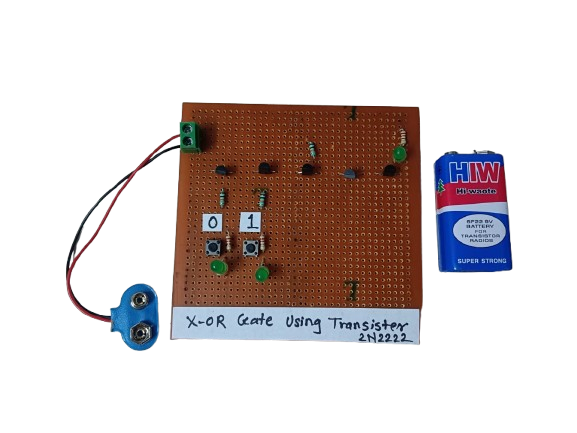
An XOR (Exclusive OR) gate is a digital logic gate that outputs true (1) only when the number of true inputs is odd. For two inputs, the output is high when the inputs are different. XOR gates can be constructed using basic logic gates or directly with transistors (BJT or MOSFET). Using transistors, we can design compact, efficient circuits for custom digital logic applications.
₹160.00 -
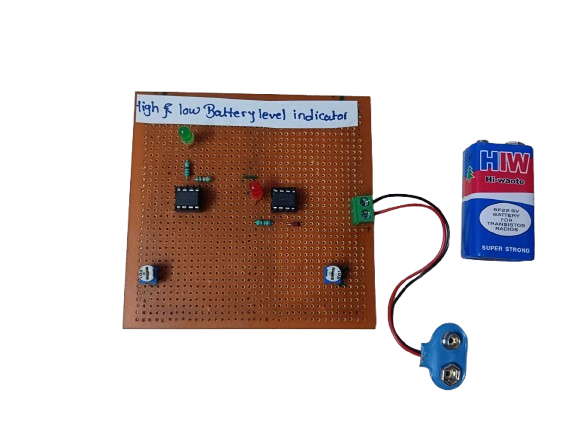
A Battery High-Low Monitor is an electronic circuit or device that detects and indicates the voltage level of a battery — whether it’s too high (overcharged), normal, or too low (discharged). It helps protect batteries from overcharging or deep discharge, which can damage the battery or reduce its lifespan.
These monitors often use comparators, voltage dividers, LED indicators, or microcontrollers to track and display battery status in real time.
₹225.00 -
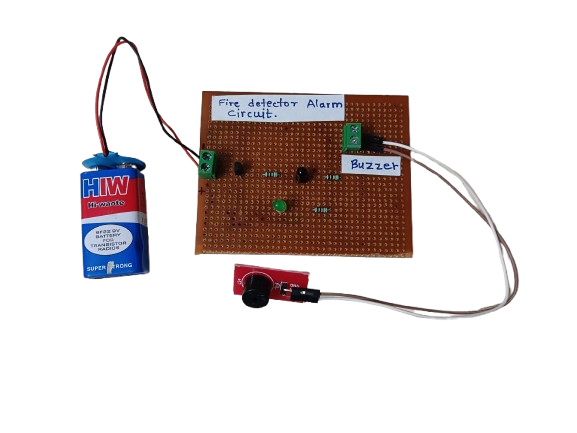
A Fire Detector Alarm is an electronic system designed to detect the presence of fire or high heat and trigger an audible or visual alarm. It typically uses sensors like thermistors, temperature sensors, or flame sensors to detect abnormal conditions indicating fire.
₹190.00 -
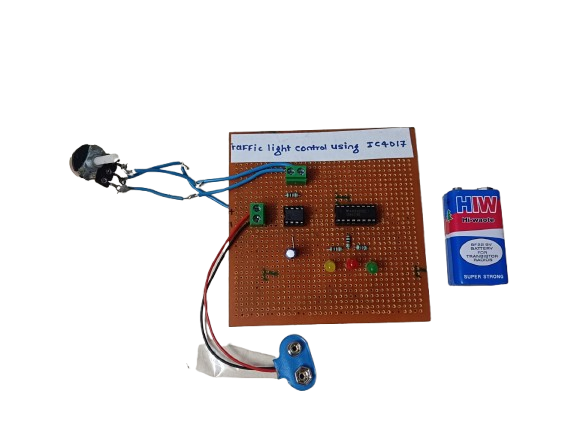
A traffic light control circuit using IC CD4017 is a simple digital electronics project that mimics the working of a real traffic light system. It uses the CD4017 decade counter IC along with a timer (usually 555 IC) to sequentially switch Red, Yellow, and Green LEDs, simulating the flow of traffic signals.
₹250.00 -
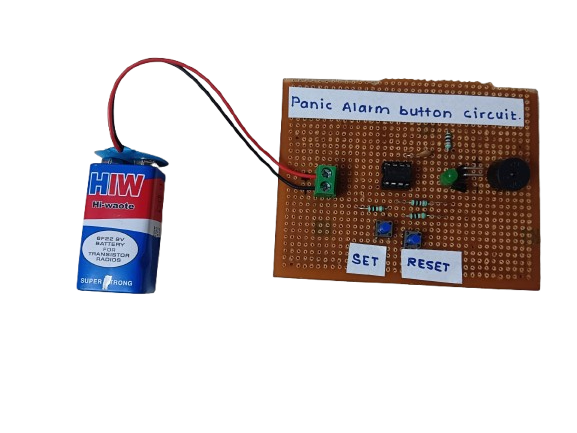
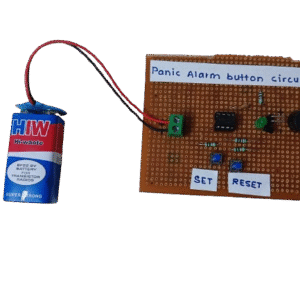
A Panic Alarm Button is a simple safety device that, when pressed, immediately activates a loud alarm, buzzer, or alert system to signal an emergency or request for help. It’s commonly used in homes, banks, hospitals, and personal security systems.
₹160.00 -
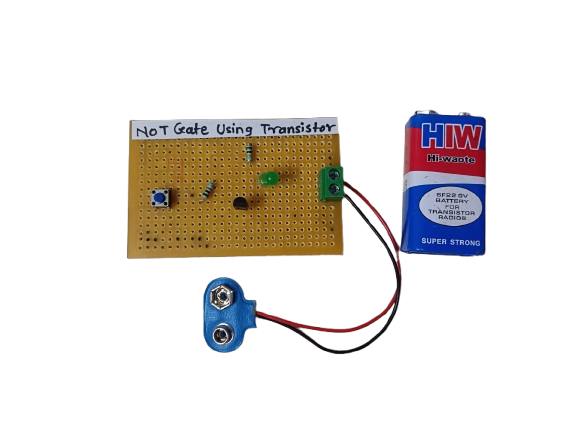
A NOR gate using transistors is a basic digital logic circuit that outputs HIGH (1) only when all inputs are LOW (0). It’s built by combining an OR gate followed by a NOT gate, using simple NPN transistors.
₹150.00