

Solar Based LED Lighting System


₹250.00
In StockA solar-based LED system is a lighting setup that uses solar energy to power LED (Light Emitting Diode) lights. During the day, a solar panel captures sunlight and converts it into electrical energy, which is stored in a battery. At night or in low-light conditions, this stored energy powers the LED light.
These systems are eco-friendly, cost-effective, and ideal for off-grid or outdoor applications like street lighting, garden lights, and emergency lighting.
Description
A solar-based LED lighting system combines two modern technologies: solar photovoltaic energy and LED lighting. It is a self-sustaining lighting solution that reduces reliance on grid electricity and promotes the use of renewable energy.
The system typically includes:
- A solar panel to collect sunlight and convert it into DC electricity.
- A rechargeable battery (usually lithium-ion or lead-acid) to store the energy.
- An LED lamp, known for its low power consumption, long lifespan, and high efficiency.
- A charge controller to regulate the flow of electricity between the panel, battery, and LED light.
When sunlight is available, the solar panel charges the battery. At night or during cloudy weather, the LED lamp draws power from the battery to provide illumination. Many systems also include automatic dusk-to-dawn sensors, which turn the light on/off based on ambient light levels.
Solar-powered LEDs are especially useful in remote areas where grid power is unavailable or unreliable. They offer a sustainable, low-maintenance, and energy-efficient alternative to traditional lighting systems.
-
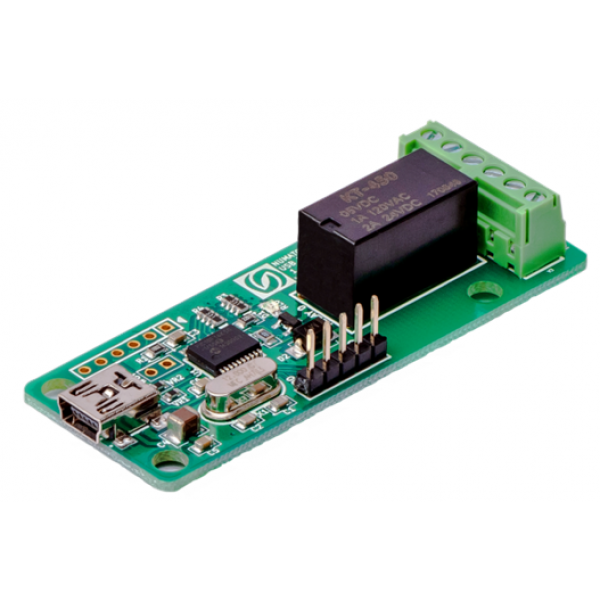
For Numato Products Price details/ quotation please mail your requirements on dolphinlabs17@gmail.com
₹4,245.00 -
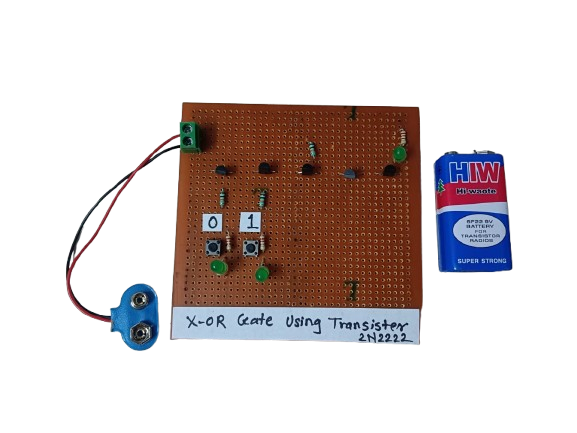
An XOR (Exclusive OR) gate is a digital logic gate that outputs true (1) only when the number of true inputs is odd. For two inputs, the output is high when the inputs are different. XOR gates can be constructed using basic logic gates or directly with transistors (BJT or MOSFET). Using transistors, we can design compact, efficient circuits for custom digital logic applications.
₹160.00 -
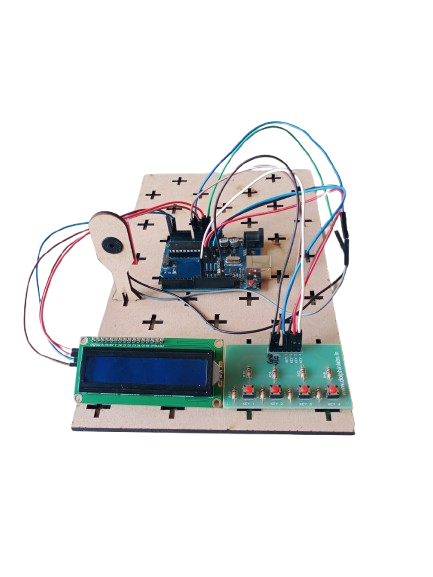
A Reaction Time Game is an interactive electronic project designed to measure a user’s response speed. Using an Arduino, keypad, buzzer, and LCD, the system tests how quickly a player can respond to a visual or auditory signal. This project is widely used in educational setups, gaming, and psychology experiments to study reflexes and reaction times.
-
The Automatic Watering System provides an efficient, reliable, and convenient way to maintain soil moisture levels without human intervention. By using sensors and a microcontroller, the system ensures that plants receive the right amount of water at the right time, reducing water wastage and promoting healthy plant growth. It is an eco-friendly solution that saves time, energy, and resources, making it ideal for both domestic and agricultural use.
-

An Arduino Theremin using Arduino, an ultrasonic sensor, and a speaker that produces varying sound pitches based on the distance of an object from the sensor.
-

A Tank Overflow Indicator using Arduino, a water sensor, and a buzzer that alerts the user by buzzing when the water tank overflows.

Related products
-
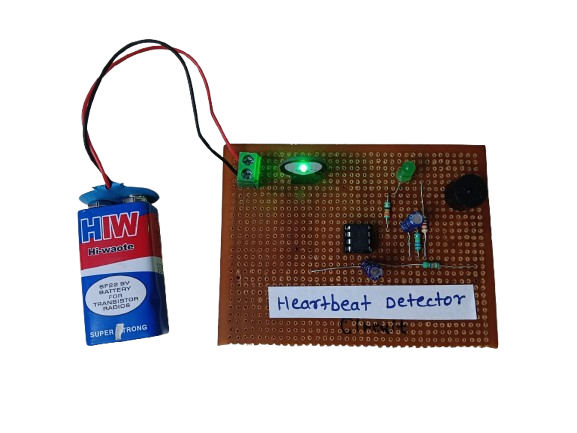
A heartbeat detector is an essential device for monitoring heart health, providing real-time data about a person’s pulse rate. Whether in a hospital, gym, or a DIY electronics project, it demonstrates how biomedical signals can be measured and processed using sensors and electronics. It’s a valuable tool for both personal health awareness and professional medical diagnostics.
₹450.00 -
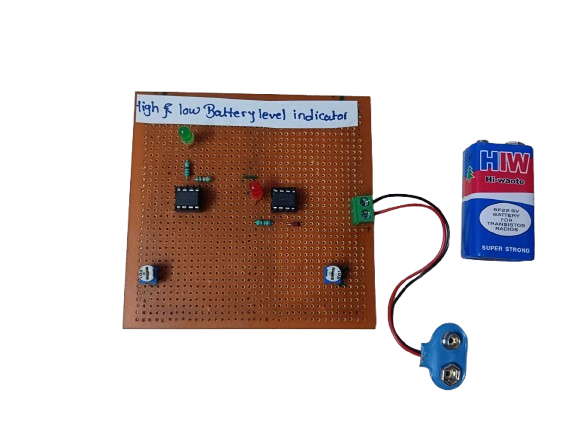
A Battery High-Low Monitor is an electronic circuit or device that detects and indicates the voltage level of a battery — whether it’s too high (overcharged), normal, or too low (discharged). It helps protect batteries from overcharging or deep discharge, which can damage the battery or reduce its lifespan.
These monitors often use comparators, voltage dividers, LED indicators, or microcontrollers to track and display battery status in real time.
₹225.00 -

A Water Level Indicator is an electronic device used to detect and display the level of water in a tank or reservoir. It helps prevent overflow and dry running of pumps by giving alerts or showing water levels in real time.
₹170.00 -
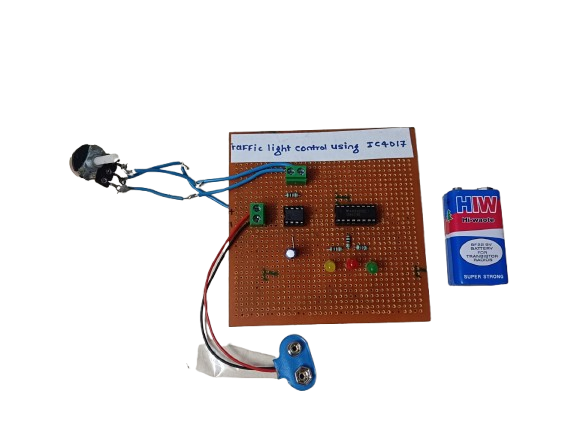
A traffic light control circuit using IC CD4017 is a simple digital electronics project that mimics the working of a real traffic light system. It uses the CD4017 decade counter IC along with a timer (usually 555 IC) to sequentially switch Red, Yellow, and Green LEDs, simulating the flow of traffic signals.
₹250.00 -
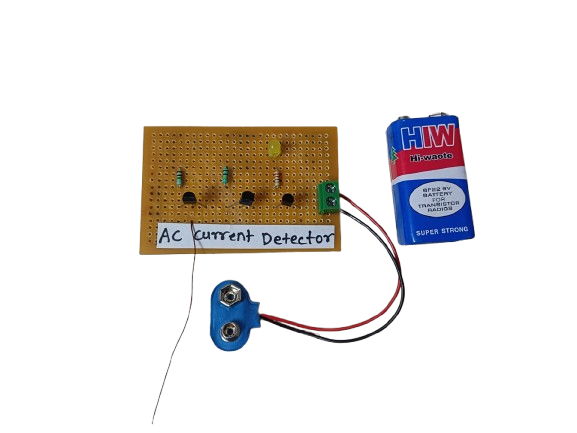
An AC Current Detector is a device or circuit that senses the flow of alternating current (AC) through a wire or appliance. It typically uses components like a current transformer (CT) or hall effect sensor to detect AC current and activate an indicator such as an LED or buzzer.
₹180.00 -
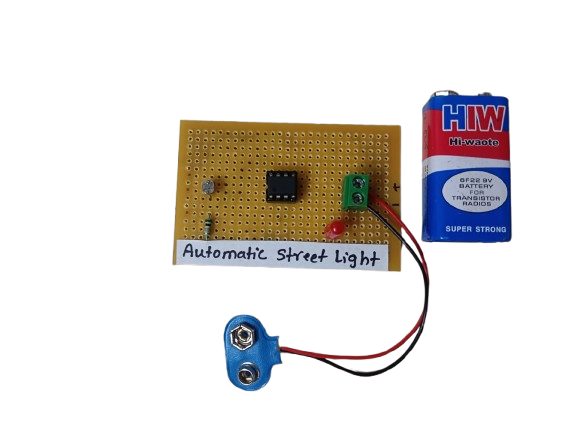
An Automatic Street Light using the IC 555 is a simple circuit that turns street lights ON at night and OFF during the day automatically. It uses a Light Dependent Resistor (LDR) to detect ambient light and a 555 Timer IC configured in comparator mode to control the switching.
₹175.00

