
Traffic Light Signal
In Stock
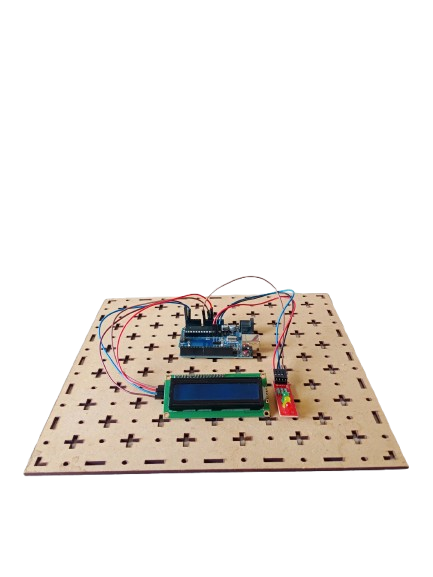
A Traffic Light Signal is an electronic project designed to manage vehicle and pedestrian traffic at intersections. Using Arduino, LEDs (Red, Yellow, Green), and an LCD, the system simulates real-world traffic light behavior, displaying signal changes with appropriate timing. This project demonstrates traffic management, embedded system programming, and microcontroller-based automation.
Description
A Traffic Light Signal System is an electronic system designed to control the flow of vehicles and pedestrians at intersections. It uses red, yellow, and green lights to indicate stop, get ready, and go, respectively. The system operates either on pre-timed sequences or through sensors that detect traffic density. Modern traffic light systems can be integrated with microcontrollers, timers, and sensors to optimise traffic flow, reduce congestion, and improve safety. This project demonstrates the basic working of a traffic light system using LED’s, a microcontroller (like Arduino), and a timer circuit.
Features
- LED Traffic Signals – Red, Yellow, and Green LED’s indicate stop, caution, and go.
- LCD Display – Shows remaining time for each signal change.
- Time Delay Control – Adjustable timing for each traffic light stage.
- Sequential Operation – Simulates real-world traffic signal sequencing.
- User-friendly Interface – Easy to understand for educational purposes.
- Energy Efficient – Low-power LED’s reduce electricity usage.
- Compact Setup – Small-scale model for demonstration purposes.
Applications
- Traffic Management – Helps design and test traffic signal systems.
- Educational Projects – Teaches students about traffic control and microcontroller programming.
- Simulation & Testing – Model for testing intelligent traffic systems.
- Arduino Learning – Demonstrates sequential logic and timing applications.
- Demonstrations & Exhibitions – Used in fairs, competitions, or workshops.
Advantages
- Realistic Simulation – Mimics actual traffic light sequences.
- Customisation Timings – Can adjust the duration for each signal.
- Easy to Build – Low-cost components and simple wiring.
- Visual & Educational – Clear LED indicators with LCD countdown.
- Portable – Can be used on desktop or classroom demonstrations.
Disadvantages
- Limited Scope – Model is small-scale and not suitable for real intersections.
- Manual Setup – Needs proper timing adjustments for accuracy.
- No Sensors – Does not detect real traffic flow unless upgraded.
- Arduino Dependent – Needs a microcontroller and programming knowledge.
- Fixed Sequence – Without advanced logic, cannot adapt to changing traffic conditions.
The Traffic Light Signal System is a simple yet essential electronic project that demonstrates how traffic flow can be controlled safely and efficiently. By using LED’s, timers, and optionally sensors, the system teaches fundamental electronic and programming concepts while addressing a real-world problem.
-

This project involves controlling a DC motor’s direction using an 8051 microcontroller, with a buzzer and LED indicating the motor’s rotation state. When the DC motor rotates forward, the microcontroller keeps the buzzer and LED off. However, when the motor is rotated in reverse, the microcontroller triggers both the buzzer and LED to turn on as a visual and audible indication of the motor’s reverse rotation
-
 ₹18,721.00
 -

-
 ₹15,660.00
 -
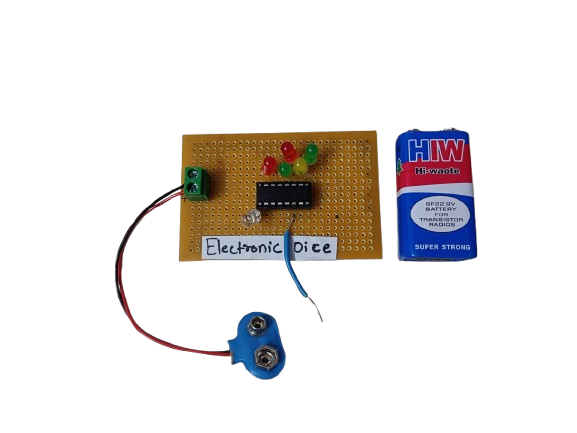
An Electronic Dice is a digital version of a traditional dice, which generates a random number (1 to 6) and displays it using LEDs or a 7-segment display. It uses components like a 555 timer, counter IC (like CD4017), or microcontrollers such as Arduino to simulate dice rolls electronically.
₹190.00 -
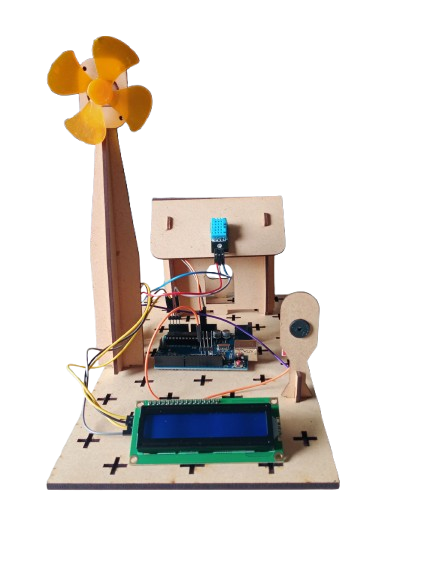
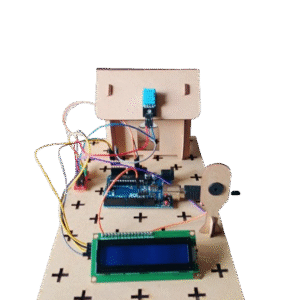
An Automatic Room Cooling is an electronic system designed to maintain a comfortable room temperature automatically. It uses a DHT11 temperature sensor to monitor the room, a DC fan for cooling, an LCD to display real-time data, and a buzzer to provide alerts. The system activates the fan automatically when the room temperature exceeds a set threshold, making it an efficient solution for homes, laboratories, and small offices.
Related products
-
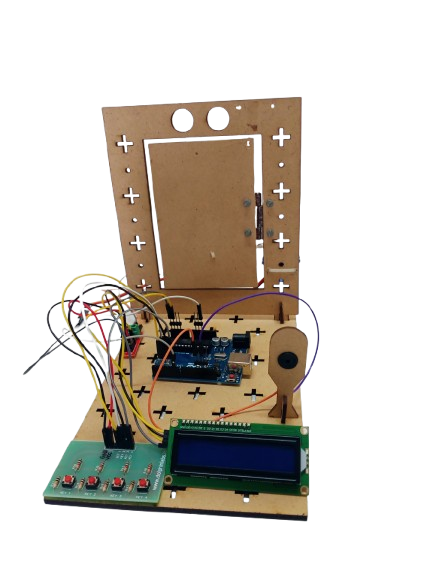
A Digital Lock System is an electronic security project designed to control access using a password entered via a keypad. It utilizes an Arduino, keypad, LCD, servo motor, and buzzer to provide a safe, automated locking mechanism. When the correct password is entered, the lock opens; if the wrong password is entered, an alert is triggered. This project is widely used in home security, lockers, safes, and access-controlled systems.
-
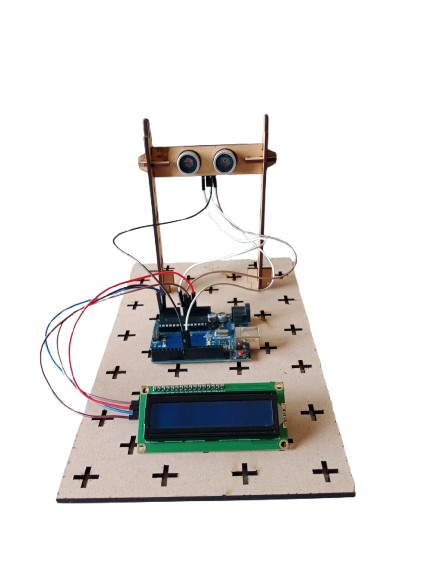
A digital ruler is an electronic measuring device that provides precise measurements of length, width, or depth. Unlike traditional rulers or tape measures, digital rulers use sensors and electronic displays (often LCD or LED) to show measurements accurately, usually in both metric (mm/cm) and imperial (inches) units. They are widely used in engineering, design, woodworking, tailoring, and education where precision is critical.
-
An Automatic Room Cooling is an electronic system designed to maintain a comfortable room temperature automatically. It uses a DHT11 temperature sensor to monitor the room, a DC fan for cooling, an LCD to display real-time data, and a buzzer to provide alerts. The system activates the fan automatically when the room temperature exceeds a set threshold, making it an efficient solution for homes, laboratories, and small offices.
-

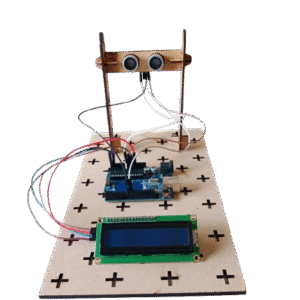
An Arduino Theremin using Arduino, an ultrasonic sensor, and a speaker that produces varying sound pitches based on the distance of an object from the sensor.
-

A DIY digital piano built using Arduino, an 8-key keypad, and a speaker, allowing users to play musical notes by pressing the keys.
₹1,400.00 -

A Rain Detection System using Arduino, a rain sensor, and a buzzer that sounds an alert when water droplets or rain are detected.

