Visitor Counter
In Stock
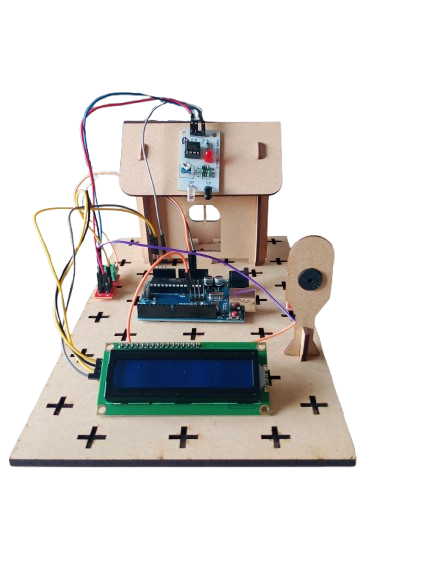
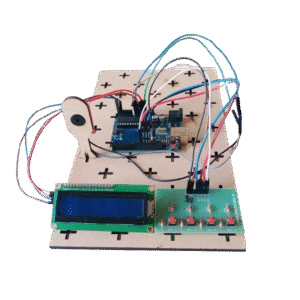
A Visitor Counter automatically counts the number of people entering or leaving a room using an IR sensor. The count is displayed on a 16×2 LCD, and a buzzer can alert when a specific limit is reached. This project is widely used in shops, libraries, offices, and events to monitor occupancy. It demonstrates sensor interfacing, counting logic, and real-time display using Arduino.
Description
A Visitor Counter using Arduino is an electronic system designed to automatically count the number of people entering or exiting a room or building. It typically uses sensors like IR (infrared) sensors, ultrasonic sensors, or motion detectors to detect movement, and the Arduino micro-controller processes the data to update the count. This system helps monitor occupancy, manage crowd control, and analyse visitor flow in places like offices, libraries, malls, and exhibitions.
Features
- Automatic Counting – Counts visitors entering and exiting without manual intervention.
- Real-Time Display – Shows the current number of visitors on an LCD or 7-segment display.
- Bidirectional Counting – Can distinguish between entry and exit.
- Sensor-Based Detection – Uses IR, ultrasonic, or motion sensors for accurate detection.
- Microcontroller Control – Arduino processes sensor data efficiently.
- Compact & Low-Power – Small, portable design with minimal power consumption.
- Programmable – Can set limits or trigger alerts when a maximum capacity is reached.
Applications
- Offices & Workplaces – Monitor occupancy and ensure safety regulations.
- Libraries & Museums – Track footfall and visitor trends.
- Retail Stores & Malls – Analyze customer traffic for business insights.
- Events & Exhibitions – Count attendees for better crowd management.
- Public Transport & Facilities – Monitor usage of buses, trains, or public halls.
Advantages
- Accurate Counting – Reduces human error in manual counting.
- Real-Time Monitoring – Immediate updates on visitor numbers.
- Easy Integration – Can be combined with alarms, displays, or databases.
- Cost-Effective – Low-cost solution using Arduino and basic sensors.
- Automation – Eliminates the need for a dedicated person to count visitors.
- Data Collection – Helps analyze visitor trends over time.
Disadvantages
- Sensor Limitations – May miscount if multiple people pass simultaneously.
- Power Dependence – Requires continuous power supply.
- Environmental Sensitivity – Dust, sunlight, or obstacles can affect sensor accuracy.
- Limited Range – IR or ultrasonic sensors have distance constraints.
- Maintenance Needed – Sensors and display may require periodic check.
The Visitor Counter project demonstrates real-time monitoring of people entering a room using Arduino, IR sensors, LCD, and a buzzer. It provides an efficient and automated method to track occupancy, helping in crowd management and safety compliance.This project is a simple yet effective introduction to sensor interfacing, counting logic, and real-time display in embedded systems.
-
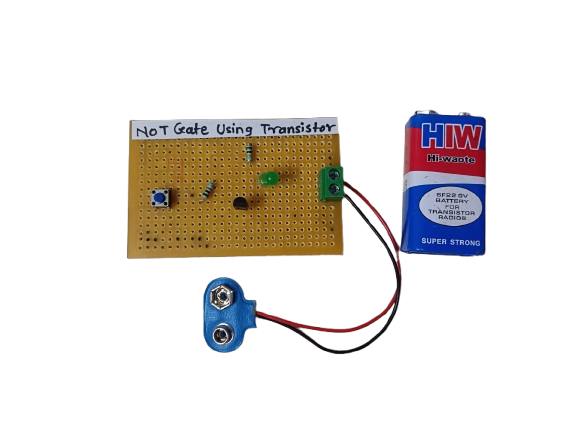
A NOR gate using transistors is a basic digital logic circuit that outputs HIGH (1) only when all inputs are LOW (0). It’s built by combining an OR gate followed by a NOT gate, using simple NPN transistors.
₹150.00 -
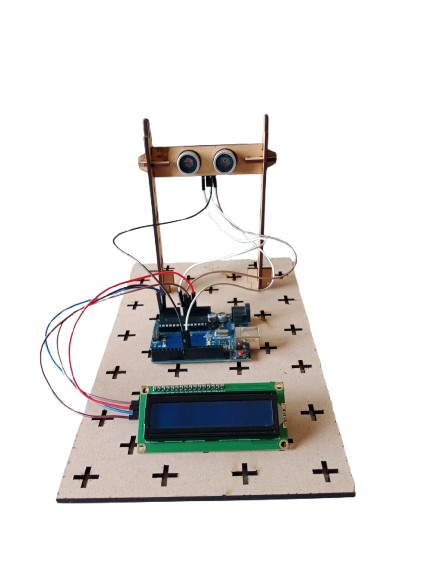
A digital ruler is an electronic measuring device that provides precise measurements of length, width, or depth. Unlike traditional rulers or tape measures, digital rulers use sensors and electronic displays (often LCD or LED) to show measurements accurately, usually in both metric (mm/cm) and imperial (inches) units. They are widely used in engineering, design, woodworking, tailoring, and education where precision is critical.
-
 ₹9,402.00
 -

-

-
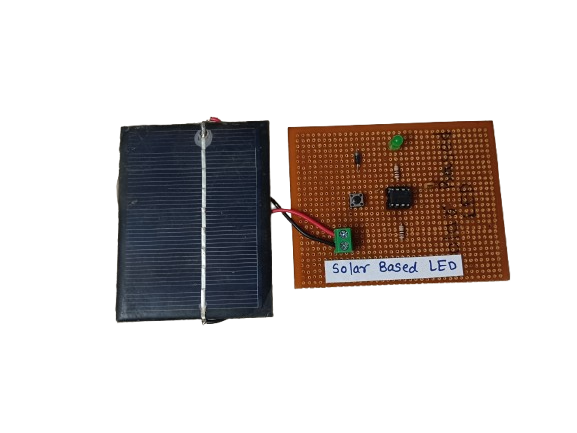
A solar-based LED system is a lighting setup that uses solar energy to power LED (Light Emitting Diode) lights. During the day, a solar panel captures sunlight and converts it into electrical energy, which is stored in a battery. At night or in low-light conditions, this stored energy powers the LED light.
These systems are eco-friendly, cost-effective, and ideal for off-grid or outdoor applications like street lighting, garden lights, and emergency lighting.
₹250.00
Related products
-

A Soil Moisture Detection System using Arduino, a soil moisture sensor, and a buzzer that sounds an alert when soil moisture is detected.
-

An Arduino Theremin using Arduino, an ultrasonic sensor, and a speaker that produces varying sound pitches based on the distance of an object from the sensor.
-
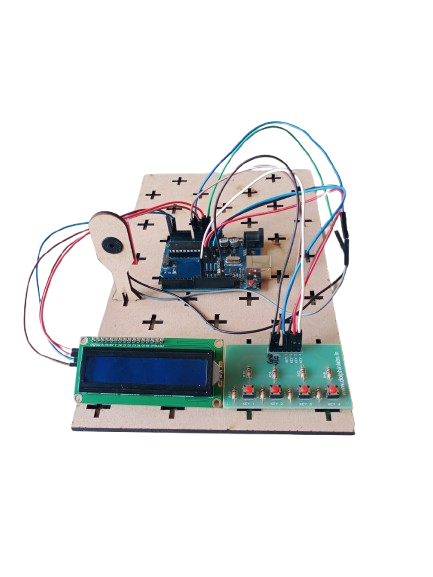
A Reaction Time Game is an interactive electronic project designed to measure a user’s response speed. Using an Arduino, keypad, buzzer, and LCD, the system tests how quickly a player can respond to a visual or auditory signal. This project is widely used in educational setups, gaming, and psychology experiments to study reflexes and reaction times.
-

A Ultrasonic Distance Measurement System using Arduino and an ultrasonic sensor that calculates the distance of an object based on the reflection time of ultrasonic waves and displays the result on the serial monitor.
-
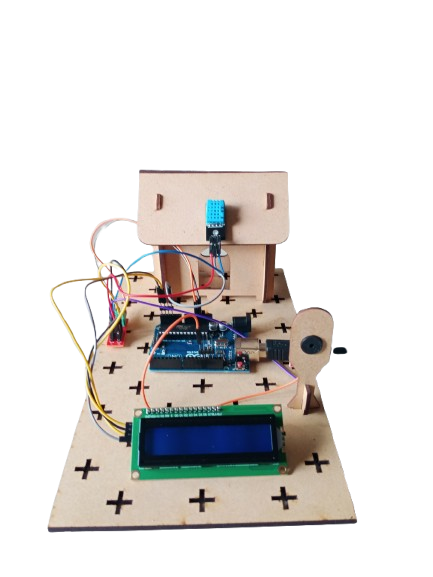
A Room Temperature Monitoring System measures and displays the temperature inside a room and alerts the user when it goes above or below preset limits. It ensures comfort, safety, and energy-efficient temperature control.
-

An Automatic Door System using Arduino, an ultrasonic sensor, and a servo motor that detects an approaching object and opens the door automatically.