Visitor Counter
In Stock
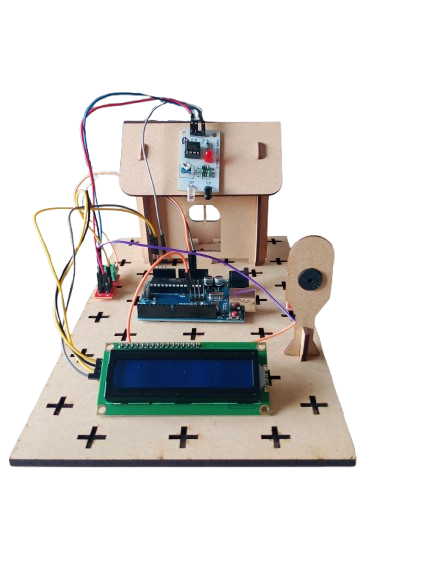
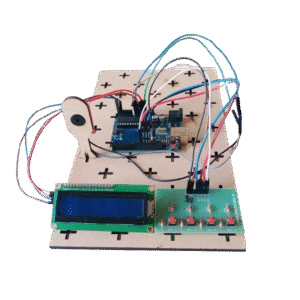
A Visitor Counter automatically counts the number of people entering or leaving a room using an IR sensor. The count is displayed on a 16×2 LCD, and a buzzer can alert when a specific limit is reached. This project is widely used in shops, libraries, offices, and events to monitor occupancy. It demonstrates sensor interfacing, counting logic, and real-time display using Arduino.
Description
A Visitor Counter using Arduino is an electronic system designed to automatically count the number of people entering or exiting a room or building. It typically uses sensors like IR (infrared) sensors, ultrasonic sensors, or motion detectors to detect movement, and the Arduino micro-controller processes the data to update the count. This system helps monitor occupancy, manage crowd control, and analyse visitor flow in places like offices, libraries, malls, and exhibitions.
Features
- Automatic Counting – Counts visitors entering and exiting without manual intervention.
- Real-Time Display – Shows the current number of visitors on an LCD or 7-segment display.
- Bidirectional Counting – Can distinguish between entry and exit.
- Sensor-Based Detection – Uses IR, ultrasonic, or motion sensors for accurate detection.
- Microcontroller Control – Arduino processes sensor data efficiently.
- Compact & Low-Power – Small, portable design with minimal power consumption.
- Programmable – Can set limits or trigger alerts when a maximum capacity is reached.
Applications
- Offices & Workplaces – Monitor occupancy and ensure safety regulations.
- Libraries & Museums – Track footfall and visitor trends.
- Retail Stores & Malls – Analyze customer traffic for business insights.
- Events & Exhibitions – Count attendees for better crowd management.
- Public Transport & Facilities – Monitor usage of buses, trains, or public halls.
Advantages
- Accurate Counting – Reduces human error in manual counting.
- Real-Time Monitoring – Immediate updates on visitor numbers.
- Easy Integration – Can be combined with alarms, displays, or databases.
- Cost-Effective – Low-cost solution using Arduino and basic sensors.
- Automation – Eliminates the need for a dedicated person to count visitors.
- Data Collection – Helps analyze visitor trends over time.
Disadvantages
- Sensor Limitations – May miscount if multiple people pass simultaneously.
- Power Dependence – Requires continuous power supply.
- Environmental Sensitivity – Dust, sunlight, or obstacles can affect sensor accuracy.
- Limited Range – IR or ultrasonic sensors have distance constraints.
- Maintenance Needed – Sensors and display may require periodic check.
The Visitor Counter project demonstrates real-time monitoring of people entering a room using Arduino, IR sensors, LCD, and a buzzer. It provides an efficient and automated method to track occupancy, helping in crowd management and safety compliance.This project is a simple yet effective introduction to sensor interfacing, counting logic, and real-time display in embedded systems.
-

A fire detection system with a buzzer is an embedded project designed to enhance safety. When smoke or heat is detected, the microcontroller triggers a buzzer to sound an alarm, alerting people to the presence of a fire
-
 ₹26,139.00
 -
 ₹4,436.00
 -
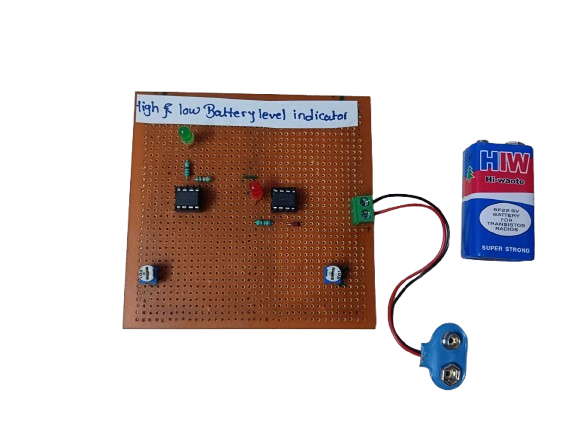
A Battery High-Low Monitor is an electronic circuit or device that detects and indicates the voltage level of a battery — whether it’s too high (overcharged), normal, or too low (discharged). It helps protect batteries from overcharging or deep discharge, which can damage the battery or reduce its lifespan.
These monitors often use comparators, voltage dividers, LED indicators, or microcontrollers to track and display battery status in real time.
₹225.00 -
 ₹9,402.00
 -
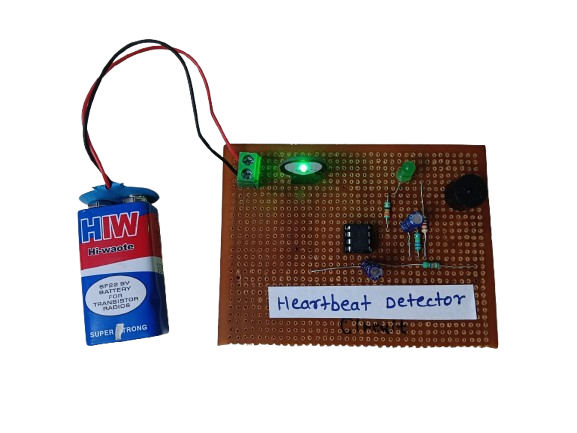
A heartbeat detector is an essential device for monitoring heart health, providing real-time data about a person’s pulse rate. Whether in a hospital, gym, or a DIY electronics project, it demonstrates how biomedical signals can be measured and processed using sensors and electronics. It’s a valuable tool for both personal health awareness and professional medical diagnostics.
₹450.00
Related products
-

An Arduino Theremin using Arduino, an ultrasonic sensor, and a speaker that produces varying sound pitches based on the distance of an object from the sensor.
-
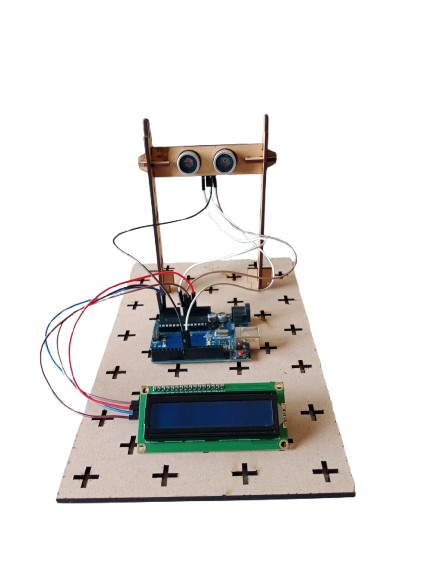
A digital ruler is an electronic measuring device that provides precise measurements of length, width, or depth. Unlike traditional rulers or tape measures, digital rulers use sensors and electronic displays (often LCD or LED) to show measurements accurately, usually in both metric (mm/cm) and imperial (inches) units. They are widely used in engineering, design, woodworking, tailoring, and education where precision is critical.
-
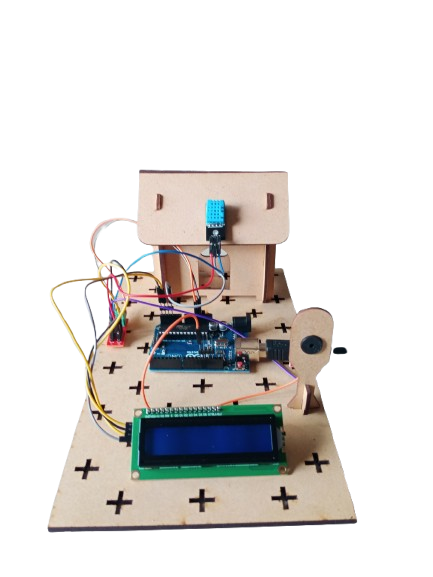
A Room Temperature Monitoring System measures and displays the temperature inside a room and alerts the user when it goes above or below preset limits. It ensures comfort, safety, and energy-efficient temperature control.
-
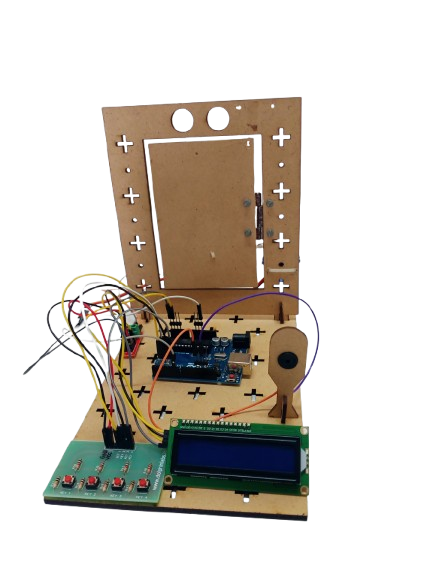
A Digital Lock System is an electronic security project designed to control access using a password entered via a keypad. It utilizes an Arduino, keypad, LCD, servo motor, and buzzer to provide a safe, automated locking mechanism. When the correct password is entered, the lock opens; if the wrong password is entered, an alert is triggered. This project is widely used in home security, lockers, safes, and access-controlled systems.
-
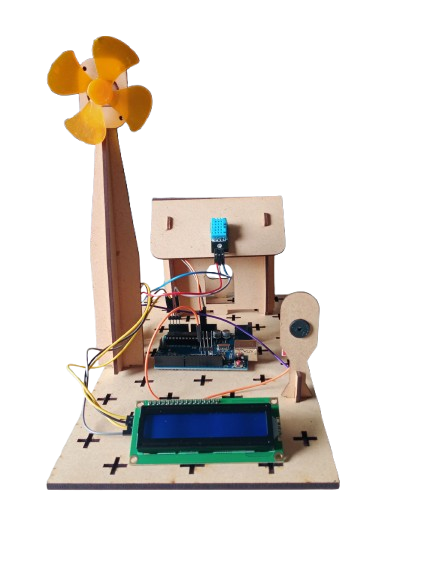
An Automatic Room Cooling is an electronic system designed to maintain a comfortable room temperature automatically. It uses a DHT11 temperature sensor to monitor the room, a DC fan for cooling, an LCD to display real-time data, and a buzzer to provide alerts. The system activates the fan automatically when the room temperature exceeds a set threshold, making it an efficient solution for homes, laboratories, and small offices.
-

A Vibration Detection System using Arduino, a vibration sensor, and a buzzer that triggers a sound alert when vibrations or movements are detected.