
Out Of Stock


Description
For Numato Products Price details/ quotation please mail your requirements on dolphinlabs17@gmail.com
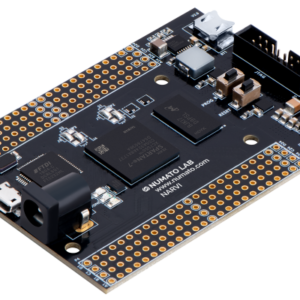
Waxwing is an easy-to-use FPGA module featuring AMD Spartan-6 FPGA with onboard DDR memory and high-density connectors for external IO interface. The carrier board makes it easy to access the IOs of the FPGA without the hassles of working with high-density connectors. On the carrier board, IOs are broken out into 100mil standard headers for easy access. The carrier board also provides easy access to JTAG signals on a standard Xilinx Platform Cable compatible header. Customization services are available for OEM customers. Please contact us for more details.
Features
- AMD Spartan 6 FPGA (XC6SLX45)
- 166MHz 512Mb LPDDR
- 3 (2x6pin)100mil expansion headers
- Flash memory: 128 Mb SPI flash memory (N25Q128A13ESE40E)
- JTAG Connector for configuration
- LED for power indication
- On-board voltage regulator
- All differential pairs are length-matched or have better signal integrity
Related products
-
 ₹4,745.00
 -
-

For quotation / Price Please send requirements on dolphinlabs17@gmail.com
₹43,499.00 -
 ₹6,295.00
 -
 ₹4,243.00
 -
For Numato Products Price details/ quotation please mail your requirements on dolphinlabs17@gmail.com
₹4,360.00